Download Student Politics in Africa: Representation and Activism - M Luescher file in ePub
Related searches:
(PDF) Student Politics in Africa: Representation and Activism
Student Politics in Africa: Representation and Activism Manja
Student Politics in Africa. Representation and Activism - Amazon.com
Student Politics in Africa: Representation and Activism – African Minds
Revolt and Protest: Student Politics and Activism in Sub
Government and Politics in Africa PG Politics and International
Student politics and the funding of higher education in South Africa
Campus Politics and Intra-Party Vote Buying in Ghana: How - ERIC
Student Politics in Africa: Representation and Activism Thierry
Student Politics and Protest: International perspectives - 1st Edition
Activation of Student Politics and Activism Through #FeesMustFall
Student Representation and Multiparty Politics in African
Student Politics and Activism in Zimbabwe: The Frustrated
STUDENT ACTIVISM AND CONTESTATION FOR POLITICAL
Student politics in Africa: representation and activism - AfricaBib
Nigerian Students and Political Mobilisation - Michigan State
Revolt and Protest: Student Politics and Activism in Sub-saharan Africa
Fees Must Fall: Student revolt, decolonisation and governance
Student power in 21st-century Africa: the character and role of
University students’ media use and political participation in
Education Sector of Africa: Problems and Solutions - HubPages
Academic Freedom of Students and Professors, and Political
501 South African Bursaries And Scholarships 2021 [UPDATED]
African Student Mobility: Regional Trends and Recommendations
Steve Biko and the Black Consciousness Movement Oxford
Poverty, Inequality and Africa’s Education Crisis
University Students' Revolt, Ethnic Militia, and Violence
Student protest and the culture of violence at African
Language Policy and Oppression in South Africa Cultural
Thus senegal, zaire, cameroon or somalia become exemplars of african politics and african political systems in general. These accounts can be persuasive precisely because such states are indeed exemplars - but not of all african states, only of significant and distinct subsets.
Egypt, nigeria, uganda and south africa all have universities in the top 500 of the global ranking. The ranking rates university performance using 13 indicators measuring teaching, research, research impact, innovation and international outlook.
The quest for political power is thus motivated by the desire to control state resources and their ‘authoritative allocation’. (46) african political class, thus try so hard to achieve political positions in their respective governments and once they get there, they work even harder to maintain these positions.
African student politics in perspective in the 20th century, african students occupied in many respects a privileged position in national politics. Given their elite status in society and credentials as spokespersons of the masses, african students’ extra-parliamentary oppositional politics enjoyed for the greatest part being a legitimate.
A deeper look at inbound mobility: why students come to south africa, and what might keep them away. A 2014 survey of almost 1,700 south african-enrolled students from countries in southern african development community represents one of the few research efforts to examine, in depth, the reasons that tertiary-level students from other african countries come to south africa.
Therefore, africa needs an improved set of policy including political, economical and institutional reforms to break the persistent poor growth performance. The economic reforms should combine market liberalization, enforcement of property rights, improved institutions as well as credibility and accountability of public servants and leaders.
The black consciousness movement of south africa instigated a social, cultural, and political awakening in the country in the 1970s. By the mid-1960s, major anti-apartheid organizations in south africa such as the african national congress and pan-africanist congress had been virtually silenced by government repression.
Some student representatives have been warned not to discuss the governing african national congress’ political leadership issues on campus.
However, black students were forced out of athletic and extracurricular activities and received detentions or suspensions. Some african americans are not enthusiastic about weaves, cornrows, braids, twists, locks, or the return of the righteous afro either. In her 1990 essay, is your hair still political? writer and civil rights activist.
As in africa, the term obscures wide historical differences in way of life, political and social organization, and culture among native americans. When we see that the same term is applied indiscriminately to native american groups and african groups, the problem of primitive savagery as the implied common denominator only becomes more pronounced.
On the left, education politics is often about increasing funding while evading responsibility for results. On the right, it’s mostly about local control and unregulated school choice. Both sides pay lip service to equity, quality and student outcomes, but it’s more of an afterthought.
Political disillusionment, student activists are key players in the pursuit of a more just, more equitable, and more democratic south africa.
University systems in many parts of south africa have witnessed student with the aim of demonstrating the longstanding and persistent student politics as well.
3 jun 2020 in this article, we examine the top universities that the children of these politicians prefer to attend.
Chapter 2: student organising in african higher education: polity, politics and policies manja klemenčič1, thierry m luescher2 and taabo mugume3 keywords: higher education governance, student associations, student politics, student activism, student representation, higher education policy introduction.
American association of university professors 1133 nineteenth street, nw, suite 200 washington, dc 20036 phone: 202-737-5900 aaup@aaup.
These seminars are open to all faculty, fellows, and phd students working on issues of african politics, or related development or political economy issues.
Chapter 16: contemporary student politics in south africa the rise of the black-led student movements of #rhodesmustfall and #feesmustfall in 2015 by leigh-ann naidoo anne heffernan is a post-doctoral researcher in the history workshop at wits and has a particular interest in the history of political activism among students in south africa.
In schools, the south african government’s per capita spending for black students was a tenth of that for white students. Under the bantu education act in 1953, schooling provided for blacks was strictly vocational. Schools were poorly constructed, with a majority lacking indoor plumbing.
Student outflow from the continent’s 54 nations in aggregate is considerable. As of 2013, african students comprised 10 percent of all internationally mobile students around the world. From 2006 to 2014, the number of african students pursuing post-secondary degrees abroad grew 24 percent, rising from 343,370 to 427,311.
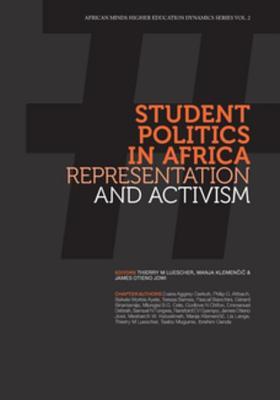
Edited by thierry luescher-mamashela, manja klemenčič, james otieno jowi.
11 mar 2021 south africa's government bowed to pressure to increase funding for university students after days of protests that left one person dead.
Right now, african immigrants are establishing more and more communities in america, thus enriching our own american culture, which puts the study of african issues and cultures at our front doorstep. African studies are important to students who want to understand their neighbors -- and themselves.
It is important that all students become familiar with the bodies of academic literature dealing with african politics.
(bloomberg) --a south african student movement plans to shut down the nation’s 26 public universities until the government meets demands including clearing debt and allowing free registration for the 2021 academic year. The step follows a weekend meeting of the south african union of students.
The second volume of the african higher education dynamics series brings together the research of an international network of higher education scholars with interest in higher education and student politics in africa.
Journal of student affairs in africa volume 7(2) 2019, 123‑141 2307‑6267 doi: campus politics; clientelism; political party; student politics; vote buying.
#feesmustfall, the student revolt that began in october 2015, was an uprising against lack of access to, and financial exclusion from, higher education in south africa. More broadly, it radically questioned the socio-political dispensation resulting from the 1994 social pact between big business, the ruling elite and the liberation movement.
The evolution of student activism in sub-saharan africa is crucial to understanding the process of democratic struggle and change.
The lessons from africa and the global south may now be relevant for europe and the global north. This growing upsurge of youth protests all over the world, crystallised in the word “enough!” needs to be understood in the context of this generation’s struggles for political, social and economic emancipation.
Its members were actively involved in student politics but it also acted as a political organization addressing critical national issues. After the pan africanist congress (pac) and the african national congress (anc) were banned by the south african government in 1960, most political activity was left to the national union of south african.
The 2011 ministerial task team report on student housing revealed that student accommodation in south africa is geared towards housing as many undergraduate students as possible in the least.
Julius agbor examines the continuing disparities in learning between rural and urban school-aged children in africa, and argues that african governments must implement policies aimed at reducing.
In less than a week, south africans will go to the polls in the country's fifth election since it's democracy in 1994.
Power changed hands within south africa's ruling african national congress a year ago, and national elections are looming. What the new ruling elite will mean for higher education is unsure, but the hot political issues this year look set to include teacher education and student fees, says dr cheryl de la rey, chief executive officer of the statutory advisory council on higher education.
New documents show trump officials' 'haphazard and ineffective' approach to procuring ppe at start of pandemic, house committee says.
Legacy of strong student unionism, student political activism and idealistic not able to do much, like their forerunners the west african students union (wasu).
The second volume of the african higher education dynamics series brings together the research of an international network of higher education scholars with interest in higher education and student politics in africa. Most authors are early career academics who teach and conduct research in universities across the continent, and who came together for a research project and related workshops and a symposium on student representation in african higher education governance.
Social protests and community actions have been a feature of south african politics for many years, but the student protests were the first major national wave of protests. South africa also has several large state-owned research institutions (science councils) outside the higher education system.
Student politics has long been a major topic for south african scholars. Indeed, in the wake of 1976, many historians conceived of the history of black education in south africa simply as the history of student protest.
And in more recent weeks, universities from south africa to pakistan have been raising their voice in protest to the ongoing persecution of rohingya muslims in burma. Those students protesting today are supported by a long and illustrious history of student activists who took measures to shape the world of politics by taking action.
The student debt crisis has hit black borrowers especially hard. Nearly 85% of african american bachelor's degree recipients carry student debt, compared with 69% of white bachelor's degree holders.
Continent, representative student associations in many african nations have had to re-position themselves in relation to liberal-democratic multi-party politics.
In october all black consciousness movement (bcm) aligned political, cultural and student formations, along with the south african students organisation (saso) and the south african students’ movement (sasm), were banned.
After the first year of an undergraduate degree, students generally have the option to specialise according to their areas of interest, whether studying a particular region’s politics, like us politics, sub-saharan africa or east asia, or choosing a broad topic, such as international relations, political philosophy or political economics.
Students enrolled in bachelors in political science can benefit from different specialisations, based on the university focus and degree offer. Specialisation options include: urban politics, international affairs, human rights, political theory and philosophy, political systems, political economy, national security, public services, and more.
African student politics in perspective in the 20th century, african students occupied in many respects a privileged position in national politics. Given their elite status in society and credentials as spokespersons of the masses, african students’ extra-parliamentary oppositional politics enjoyed for the greatest part being a legitimate part of the political order (altbach 1984; munene 2003; byaruhanga 2006).
Students were at the forefront of struggles for political liberalisation, and sometimes received support from secondary school students, their teachers, and other professional groups. Kohstall (2015) argues that student protests in egypt and morocco were an integral part of the arab uprisings in 2011.
The transition from one-party rule and other forms of authoritarianism to multiparty democracy in the 1990s has had a profound impact on the organisation and role of student politics in africa. Against the background of student involvement in african politics in the twentieth century, leading up to student participation in africa's second.
Students are not accountable to the university authorities about their political views and the university should pose no constraints on the expression of student’s political views, except when it interferes with overall learning environment. It is an illusion to think that one can stop students from engaging in politics.
The violent dut student protests earlier this week that led to five stabbings was spurred by campaign politics between the effsc and sasco.
The world recognizes south africa as one of the most developed countries in africa housing some of the best universities in africa. This is not an exaggerated statement, because south africa has introduced itself in the academic world to provide excellent education and presenting good scholarship platforms for students to explore and make academics very easy.
The number of mainly west african students in britain steadily increased in this century. After 1920 african students were increasingly influenced by pan‐africanist ideas and the nationalist movements, as well as radical politics and the experience of racial discrimination in britain, and they formed various political organisations.
Student protests swept across south african campuses in 2015 and 2016 under the banner of #feesmustfall.
Language and politics are very much intertwined in south africa, as they are everywhere. The government's divide-and-conquer approach to black language policy is allied to the whole degrading system of laws that keep blacks in permanent poverty. Enlightened policy is needed in the area of language as well as in all other aspects of political life.
Furthermore, p ost-apartheid south africa is also faced with a challenge where the president, jacob zuma, is said to empower most political elites from his tribe or ethnic group (zulu tribe) and exclude other ethnic groups. As a result, the deployment of culture in politics can give rise to dangerous forms of narrow nationalism and increases.
Kamanzi discusses why it is so crucial to ensure science, technology, engineering and mathematics courses have a much stronger political component, equipping students with the critical capacity for interrogating the politics of industry and development in south africa and beyond.
As anti-colonial movements spread across africa, asia, and latin america in the mid 20th-century, the ussr saw this as an opportunity to extend its activity to developing countries.
The south african student organisation (saso) was formed in 1968 after some members of the university of natal’s black campus src (student representative council) decided to break away from the national union of south african students (nusas). Nusas was a liberal organisation dominated by white students.
10 mar 2021 in tonight's edition: at least one person has died and two students have been injured in clashes between south african students and police.
In south africa, and in the kwazulu/natal province of south africa in particular, political violence in education has a unique legacy. It is the outcome of a powerful and vocal student movement which resulted in schools becoming important sites of anti-apartheid struggle.
Many doctors in africa do not undergo serious practical training on the kind of treatment to give the infants. This is one of the causes of the high infant death in africa. Hindrances from institutions: this has to do with the attitudes of many african universities to the students. Some universities in this continent do not permit the students.
Born jackson mphikwa mthembu in 1958 in emalahleni (then witbank), mpumalanga, he joined the political arena as a student activist, where he had his fair share of run-ins with apartheid law enforcement authorities. His political life included stints as the spokesperson for the african national congress (anc) at the provincial and national levels.
The final two chapters address malema's political ascension in regional branches of the congress of south african students (cosas) and the anc youth.
Over the past year, student protests under the banners #rhodesmustfall and #feesmustfall have swept south africa, demanding the “decolonization” of curricula and greater educational access. This article contextualizes these protests, drawing on a vibrant historiography on student politics under apartheid (1948-1994). In scholarship produced during the antiapartheid movement, it often.
The evolution of student activism in sub-saharan africa is crucial to understanding the process of democratic struggle and change in africa. Focusing on the recent period of 'democratic transitions' in the 1990s, leo zeilig discusses the widespread involvement of student activism in democratic struggles across contemporary africa and focuses on two case studies, senegal and zimbabwe.
Title: student politics in africa: representation and activism.
Isbn 0-901787-13-2; african personality (1963) the essence of neo-colonialism is that the state which is subject to it is, in theory, independent and has all the outward trappings of international sovereignty. In reality its economic system and thus its political policy is directed from outside.
Key word: student union; student politics; campus violence; academic nkinyangi (1991) examined the role of student activism in sub saharan africa.
Most authors are early career academics who teach and conduct research in universities across the continent,.
(the protesters have now moved to south africa’s parliament and at the time of writing had broken through parliament’s gates, marching with hands up before being shot at with teargas and stun grenades) the issue of student fee increases, and more generally the exorbitant cost of higher education for the average south african, have become.
Post Your Comments: