Read Online A Textbook of Human Microbes and Parasites: A Quick Reference to Paramedics, Biologists and Biotechnologists - Prof. P. Venkatasan file in ePub
Related searches:
Buy A Textbook of Human Microbes and Parasites: A Quick
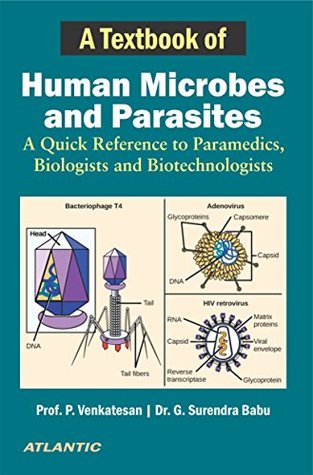
A Textbook of Human Microbes and Parasites: A Quick Reference to Paramedics, Biologists and Biotechnologists
The Human Microbiota in Health and Disease: An Ecological and
The Human Microbiota and Microbiome - CABI.org
Introductory Chapter: Human and Microbes in Health and Diseases
Study of the Human Microbiome - The Human Microbiome, Diet, and
Microbes and Malignancy: Infection as a Cause of Human
The plant microbiome and its importance for plant and human health
7.14: Microbes and the Human Body - Biology LibreTexts
Your Microbes and You NIH News in Health
7.16: Bacteria and Humans - Biology LibreTexts
Microbial Inhabitants of Humans: Their Ecology and Role in Health
The Human Microbiome: Guts And Glory : NPR
Human Microbes - The Power Within - Health, Healing and
Top and Best Microbiology Books (Updated 2021)
Full version A Handbook of Scientists and Clinicians Oxford
Routes of transmission Microbes and the human body
The Human Microbiome in Health and Disease - ARUP Scientific
Role of microbes in human health and disease
I Contain Multitudes: The Microbes Within Us and a Grander
Watch Your Mouth! and discover the amazing microbes inside
Bacteria and Humans - CK12-Foundation
Introduction to Microbes and Human Body Systems National
Teaching Kids About Microbes and Bacteria Ask A Biologist
Second microbes and their relationship to environ ments and
Find books like 10% human: how your body's microbes hold the key to health and happiness from the world's largest community of readers.
Todar's online textbook of bacteriology discusses important bacteria that are pathogens of humans. Looking for the most current news, updates, and articles relating to microbiology, go to the american society for microbiology educational website microbe world�.
Thousands of different microbial species colonize the human body, and are essential for our survival.
Microbes also serve as small factories, producing valuable products such as cheese, yogurt, beer, wine, organic acids and many other items. In conclusion, while it is less apparent to us, the positive role of microbes in human health is at least as important as the negative impact of pathogens.
You are a microbe living in the human intestine and are unable to synthesis your own vitamins, what would be the best type(s) of microbe-microbe relationship for you to form and why?.
Good non-fiction books about viruses, bacteria and diseases they cause. Score a book’s total score is based on multiple factors, including the number of people who have voted for it and how highly those voters ranked the book.
29 may 2019 final outcomes from the most comprehensive analysis to-date of humans and their microbiomes definitively link microbes and microbial.
1 sep 2005 on the significance of commensal microorganisms in humans. “is a core textbook for advanced students taking courses in microbiology,.
Human interactions with microbes include both practical and symbolic uses of microbes, and negative interactions in the form of human, domestic animal, and crop diseases. Practical use of microbes began in ancient times with fermentation in food processing� bread� beer and wine have been produced by yeasts from the dawn of civilisation, such.
Find books coming soon in 2021 the human superorganism by rodney dietert, phd the microbiome, professor rodney dietert presents a new paradigm in human biology that has emerged “dietert makes the cogent and eye-opening argume.
The biological control of human infections was largely restricted to the treatment of surface infections of the skin and mucous membrane. Additionally, attempts were made to alter the microflora of the human intestinal tract to favor the growth of benign or beneficial bacteria or yeasts.
The normal flora of humans consists of a few eucaryotic fungi and protists, but bacteria are the most numerous and obvious microbial components of the normal flora. Gram stain of a species of micrococcus, commonly isolated from the skin and nasal membranes of humans.
Second, microbes and their relationship to environ-ments and other organisms change over time. Usually, this has been a gradual process, but not always—we must allow for factors that may have altered the characteristics and impact of disease-causing agents.
In 2007, nih launched the human microbiome project to study microbes in and on the body. Earlier this year, researchers from almost 80 institutions published a landmark series of reports. They found that more than 10,000 different species occupy the human body.
Transmission involves the following stages: escape from the host or reservoir of infection (where the infectious.
5 jun 2017 quick book review - 10% human: how your body's microbes hold the key to health and happiness.
Microbes is a kid-friendly introduction to bacteria in the human body. Educators will enjoy the comic book style used to tell the story of how good bacteria in our bodies help keep us healthy and what happens when the bad ones get out of control.
A variety of microbes are used to synthesize a number of industrial products valuable to human beings. Industrial production requires the formation of large quantities of the product, which normally involves the microbial reactions to proceed in a specialized vessel called fermentor or bioreactor.
The bacteria book is a fun and informative introduction to a stem subject that brings kids up-close to the big world of tiny science. With remarkable photography, kooky character illustrations, and lots of fun facts, this book uses real-life examples of microbiology in action to show how tiny microbes affect us in big ways.
Rautava's research efforts focus on the short- and long-term health effects of early microbial contact and the transfer of bacteria from the mother to the infant during.
From birth, our microbes become as personal as a fingerprint� shots - health news trillions of microbes live on and in the human body, tucked into very different ecosystems.
They help digest food, make vitamins, and play other important roles.
Chemistry, biology, evolution, and the practical health sciences of people and microbes. This books offers some great insights on the importance of our microbiome and the incredible biodiversity of microbes in our body, emohasizing h pylori and the correlation and potential causalities resulting from the war on this age old microbe.
Bacteria in the human gi tract have been shown to produce vitamins and may otherwise contribute to nutrition and digestion. But their most important effects are in their ability to protect their host from establishment and infection by alien microbes and their ability to stimulate the development and the activity of the immunological tissues.
Human-microbe interactions can vary from a stable interaction to one where microbes can cause disease. There are locations on the body where microbes are normally present and offer a level of protection for humans, and there are locations on the body where microbes are absent.
Every animal, whether human, squid, or wasp, is home to millions of bacteria and other microbes. Many people think of microbes as germs to be eradicated, but those that live with us—the microbiome—build our bodies, protect our health, shape our identities, and grant us incredible abilities.
- bacteria, fungi, protozoa and viruses - that live on and inside the human body.
Online textbook of bacteriology table of contents general bacteriology overview of bacteriology the impact of microbes on the environment and human activities.
Generally microbes can be divided in to two categories: the cellular microbes (or organisms) and the acellular microbes (or agents). In the cellular camp we have the bacteria, the archaea, the fungi, and the protists (a bit of a grab bag composed of algae, protozoa, slime molds, and water molds).
Trillions of bacteria, viruses, fungi and other microbes dwell in organized communities in and on the nooks and plains of the human body.
Microbes: the good, the bad, the ugly takes you on comic book journey inside the human body where there are both good and bad bacteria and viruses.
Missing microbes: how the overuse of antibiotics is fueling our modern plagues. On this this engaging book on the importance of the microbiome in human health weaves the personal and professional.
Microbes are organisms that are too small to be seen by the human eye and include bacteria, archaea, protists, viruses, and fungi. Although some microbes cause disease, they are also crucial to the functioning of human bodies through processes such as digestion and aiding the immune system, and ecosystems through processes such as nutrient and energy cycling.
Bacteria, too, have been the cause of some of the most deadly diseases and widespread epidemics of human civilization. Bacterial diseases such as tuberculosis, typhus, plague, diphtheria, typhoid fever, cholera, dysentery and pneumonia have taken a huge toll on humanity.
Oomycetes and nematodes should be mentioned since they are microbes as well. Like many general microbiology books, this book is heavily focused on microbes that interact with humans/mammals. It would also be good to mention that microbes associate with all domains of life (for example, viruses infect animals, plants, fungi, protists, etc).
Microbiology is a broad term which includes virology, mycology, parasitology, bacteriology, immunology, and other branches. A microbiologist is a specialist in microbiology and these related topics. Microbiological procedures usually must be aseptic and use a variety of tools such as light microscopes with a combination of stains and dyes.
Prior to the hmp launch, it was often reported in popular media and scientific literature that there are about 10 times as many microbial cells and 100 times as many microbial genes in the human body as there are human cells; this figure was based on estimates that the human microbiome includes around 100 trillion bacterial cells and an adult human typically has around 10 trillion human cells.
The human microbiota: how microbial communities affect health and disease.
In many ways your mouth is a living lab and you are the lab master. This book tells you how and why to watch your mouth! for more information about this book, contact jdiamond1@unl.
Comparable with our human microbiome, millions of microbes inhabit plants, forming complex ecological communities that influence plant growth and health.
I have now read many books on the ever-unfolding subject of the gut microbiome but this one is the best.
Free pdf download of ncert solutions for class 12 biology chapter 10 - microbes in human welfare solved by expert teachers as per ncert (cbse) textbook guidelines. All chapter 10 - microbes in human welfare exercises questions with solutions to help you to revise complete syllabus and boost your score more in examinations.
You have ten times as many bacteria as human cells in your body. Examples of bacterial diseases include tetanus, syphilis, and food poisoning.
18 apr 2020 microbes in our gut are key to staying healthy, but scientists are coming to “the human microbiome has completely driven a lot of our thinking.
In addition to the human microbiome, microbes live in plants, soil, oceans, and the atmosphere. These microbiomes maintain healthy function of these diverse ecosystems, influencing human health, climate change, food security, and other factors. Escherichia coli is a bacterium that is one of the most well-studied microbes in our human microbiome.
This covers the basics of microbiology, starting with a brief history of microbiology and the impact microbes have had on humans. The text covers the application of genetics in microbiology research, microbial metabolism to provide a background on the function of microbes before delving into their role in diseases and human health.
Their cell wall is different from bacteria and contains unique lipids that enable them to survive in extreme conditions. To know more about what are microbes and the different types of microbes, keep visiting byju’s website.
Human microbiome, the full array of microorganisms (the microbiota) that live on and in humans and, more specifically, the collection of microbial genomes that.
Are you searching tamilnadu board class 12th bio-zoology (core) chapter 8 microbes in human welfare textbook? you can now download tn board class.
Home books role of microbes in human health and diseases human microbiome is defined as the total genomes of microbes (constitute bacteria,.
Finally, the book focuses on the future when the workings of the human microbes will be fully unravelled. Societal changes in health education, the establishment of the microbiome bank, the fight against hunger, space travel, designer traits and enhanced security are explained.
Carney is a sociocultural and medical anthropologist with specializations in migration and health, food insecurity, and the politics of care. She is assistant professor of anthropology and director of the center for regional food studies at the university of arizona.
The human superorganism makes a sweeping, paradigm-shifting argument. It demolishes two fundamental beliefs that have blinkered all medical thinking until very recently: 1) humans are better off as pure organisms free of foreign microbes; and 2) the human genome is the key to future medical advances.
The surfaces of the human body inside and out, for example the skin, mouth and the intestines, are covered in millions of individual micro-organisms that don’t do us any harm. In fact they help to protect us from becoming infected with harmful microbes.
Copyrighted material with the response of the human host to microbial nature.
These collective microbes and their genes are referred to as the human microbiome. There are currently an estimated 5,000,000 - 10,000,000 genes from over 1000 species that constitute the human microbiome compared to the approximately 20,000 - 23,000 genes that make up the human genome.
How your body's microbes hold the key to health and happiness.
Post Your Comments: