Read The Theory of Moral Sentiments: To Which Is Added a Dissertation on the Origin of Languages - Adam Smith | ePub
Related searches:
The Theory of Moral Sentiments - Wikipedia
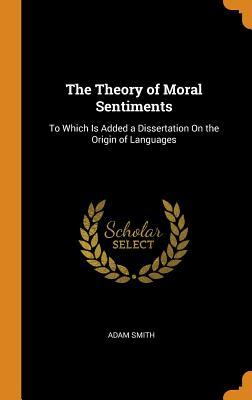
The Theory of Moral Sentiments: To Which Is Added a Dissertation on the Origin of Languages
The Theory of Moral Sentiments — Adam Smith Institute
Adam Smith - The Theory of Moral Sentiments Britannica
The Theory of Moral Sentiments: Smith, Adam: 9781614279983
The Theory of Moral Sentiments and on the Origins of Languages
Adam Smith: The Theory of Moral Sentiments
The Essential Adam Smith: Moral Sentiments - YouTube
Invidious Sympathy in The Theory of Moral Sentiments Cairn.info
The Theory Of Moral Sentiments: Smith, Adam: 9781297853838
The Theory of Moral Sentiments - ibiblio
The Theory of Moral Sentiments: To which is Added a
The Theory of Moral Sentiments - Early Modern Texts
The Theory of Moral Sentiments Summary GradeSaver
Buy The Theory of Moral Sentiments (Penguin Classics) Book
The Theory of Moral Sentiments The Core Curriculum
The Theory of Moral Sentiments: Amazon.co.uk: Smith, Adam: Books
The Theory of Moral Sentiments - Hey There, tinyco.re Is A Branded
Smith's The Theory of Moral Sentiments: Sympathy - Project MUSE
The Theory of Moral Sentiments and The Wealth of Nations. Ethics
The notion of prudence in the Theory of Moral Sentiments of Adam
The Theory of Moral Sentiments by Adam Smith
The theory of moral sentiments (1777 edition) Open Library
The Theory of Moral Sentiments - Smith, Adam - 9781420938425
The Theory of Moral Sentiments Project Gutenberg Self
The Theory of Moral Sentiments - Econlib
Review: The Theory of Moral Sentiments - HKT Consultant
[PDF] The Theory of Moral Sentiments Book by Adam Smith Free
30+ quotes from The Theory of Moral Sentiments by Adam Smith
The Theory of Moral Sentiments Adam Smith First Edition
The Theory of Moral Sentiments Panmure House
The Theory of Moral Sentiments - Adam Smith (économiste
Knud Haakonssen (ed.), Adam Smith: The Theory of Moral Sentiments
Adam Smith, The Theory of Moral Sentiments: The Glasgow Edition
The Theory of Moral Sentiments by Adam Smith - Goodreads
Criticism of The Theory of Moral Sentiments - Oxford Scholarship
The Theory Of Moral Sentiments by Adam Smith - Penguin Books
The Theory of Moral Sentiments - Adam Smith - Google Books
The theory of moral sentiments: By Adam Smith
The Theory of Moral Sentiments (Part 1) – eThekwini Online
The Relationship of Theory of Moral Sentiments to Wealth of Nations
3. THE THEORY OF MORAL SENTIMENTS - De Gruyter
Buy The Theory of Moral Sentiments by Smith Adam at Low - Flipkart
Theory of Moral Sentiments, The The Portobello Bookshop
Adam Smith's The Theory of Moral Sentiments: A Critical
The Theory of Moral Sentiments - Wikisource, the free online
The theory of moral sentiments : Smith, Adam, 1723-1790
The Theory of Moral Sentiments Summary SuperSummary
THE THEORY OF MORAL SENTIMENTS - Ukemi Audiobooks
The Theory of Moral Sentiments work by Smith Britannica
The Theory of Moral Sentiments, Adam Smith 1759
Smith, Adam, The Theory of Moral Sentiments. 1790. Library of
The Theory of Moral Sentiments / Edition 1 by Adam Smith
The Theory of Moral Sentiments by Adam Smith: 9780143105923
Theory of Moral Sentiments The Trinity Forum
The theory of moral sentiments; : Smith, Adam, 1723-1790
The Theory of Moral Sentiments: The classic philosophical
― adam smith, quote from the theory of moral sentiments “to those who have been accustomed to the possession, or even to the hope of public admiration, all other pleasures sicken and decay. Of all the discarded statesmen who for their own ease have studied to get the better of ambition, and to despise those honours which they could no longer arrive at, how few have been able to succeed?”.
31 may 2018 the first reviews of adam smith's the theory of moral sentiments (tms) were warm and favorable.
The theory of moral sentiment brought him into the limelight in the 1760s. This one is the finest treatise on moral philosophy and sentiments. 98 likes like see review jun 30, 2012 brett ellingson rated it it was amazing review of another edition.
Smith's theory is, that the primary objects of our moral perceptions are the actions of other men; and that our moral judgments with.
The theory of moral sentiments by adam smith (1759) part i: of the propriety of action consisting of three sections section iii: of the effects of prosperity and adversity upon the judgment of mankind with regard to the propriety of action; and why it is more easy to obtain their aprobation in the one state than in the other chap.
Of the questions which ought to be examined in a theory of moral sentiments. Of the different accounts which have been given of the nature of virtue.
Introduction to the theory of moral sentiments this was adam smith’s first major published work. It appeared in 1759 and was based on his lectures given at glasgow university since his appointment as professor of moral philosophy in 1752.
The theory of moral sentiments, written by adam smith in 1759, is an important work in the theory of capitalism, wherein the ethical, philosophical, psychological and methodological underpinnings to smith's later works are provided, including the wealth of nations (1776).
Please use the following text to cite this item or export to a predefined format: bibtexcmdi. Smith, adam, 1723-1790, the theory of moral sentiments, oxford text.
Charles darwin's theory of moral sentiments: what darwin's ethics really owes to adam smith.
The theory of moral sentiments was a real scientific breakthrough. It shows that our moral ideas and actions are a product of our very nature as social creatures. It argues that this social psychology is a better guide to moral action than is reason.
Smith on moral sentiments part vii: systems of moral philosophy 139 section 1: the questions that ought to be examined in a theory of moral sentiments.
11 mar 2019 in adam smith's first book, the theory of moral sentiments, he wanted to understand how human beings decide what is right and wrong?.
The theory of moral sentiments page 202 - the first is the spectator, whose sentiments with regard to my own conduct i endeavour to enter into, by placing.
The theory of moral sentiments divides moral philosophy into four parts: ethics and virtue; private rights and natural liberty; familial rights (called economics); and state and individual rights (called politics).
15 feb 2013 moral rules, formed on the basis of our reactions to specific instances (we say to ourselves, “i'll never do that”), bar certain especially egregious.
Effectively laying the groundwork for his later work in economics, smith in the theory of moral sentiments sets forth a theory of how we come to be moral, of how this morality functions on both individual and societal levels, and of what forces are likely to corrupt our sense of morality. The main point that smith makes is that our sense of morality is derived from our capacity to sympathize directly and indirectly with other people.
It provided the ethical, philosophical, psychological, and methodological underpinnings to smith's later works, including the wealth of nations (1776), essays on philosophical subjects (1795), and lectures on justice, police, revenue, and arms (1763) (first published in 1896).
The theory of moral sentiments is based on smith's assertion that we are both social (mutally sympathetic) and self-interested beings, and that social order.
Many people know adam smith as the economic genius whose 1776 wealth of nations helped us see the potential of the free market system. But his famous “invisible hand” actually appears first in a theory of moral sentiments (1759, 1790), which smith considered his best and most important work. Here he lays out the personal moral foundations necessary for a free market economy and a free society.
Of the propriety of action -- of merit and demerit, or, of the objects of reward and punishment -- of the foundation of our judgments concerning our own sentiments and conduct, and of the sense of duty -- of the effect of utility upon the sentiment of approbation -- of the influence of custom and fashion upon the sentiments of moral approbation and disapprobation -- of the character of virtue -- of systems of moral philosophy -- considerations concerning the first formation of languages.
In every passion of which the mind of man is susceptible, the emotions of the by-stander always correspond to hat, by bringing the case home to himself, he imagines should be the sentiments of the sufferer. Pity and compassion are words appropriated to signify our fellow-feeling with the sorrow of others.
Written in 1759 by scottish philosopher and political economist adam smith, the theory of moral sentiments provides much of the foundation for the ideas in his later works, most notably in the wealth of nations. Through this initial text, smith expresses his general system of morals, exploring the propriety of action, reward and punishment, sense of duty, and the effect of numerous factors.
In 1759 smith published his first work, the theory of moral sentiments. Didactic, exhortative, and analytic by turns, it lays the psychological foundation on which the wealth of nations was later to be built. In it smith described the principles of “ human nature�” which, together with hume and the other leading philosophers of his time, he took as a universal and unchanging datum from which social institutions, as well as social behaviour, could be deduced.
In his first book, the theory of moral sentiments, he investigated the flip side of economic self-interest: the interest of the greater good.
The great moral philosopher and political economist, adam smith, was born on june.
The theory of moral sentiments; by smith, adam, 1723-1790; stewart, dugald, 1753-1828.
The theory of moral sentiments part one: of the propriety of actions part two: of merit and demerit part three: of the foundation of our judgment concerning our own sentiments and conduct part four: of the effect of utility upon the sentiment of approbation part five: of the influence of custom.
A negative view of tms came from the common sense philosopher, thomas reid, who argued that smith's system did not offer a standard of virtue for measuring.
The theory of moral sentiments, is a book about how society conducts itself. Smith examines the how and why, of people`s approach to life.
Adam smith - adam smith - the theory of moral sentiments: in 1759 smith published his first work, the theory of moral sentiments.
Best known for his revolutionary free-market economics treatise the wealth of nations, adam smith was first and foremost a moral philosopher. In his first book, the theory of moral sentiments, he investigated the flip side of economic self-interest: the interest of the greater good.
Section 1: the questions that ought to be examined in a theory of moral sentiments�.
This critical exposition of adam smith’s theory of moral sentiments, first published in 1971, gives an appreciation of smith’s conception of scientific method as applied to the study of social.
Publisher: cambridge university press online publication date: june 2012 print publication year: 2002 online isbn: 9780511800153.
Adam smith's theory of moral sentiments (1759) lays the foundation for a general system of morals, and is a text of central importance in the history of moral and political thought.
Ii: of the origin of ambition, and of thedistinction of ranks. It is because mankind are disposed to sympathize more entirelywith our joy than with our sorrow, that we make parade of ourriches, and conceal our poverty.
The theory of moral sentiments is based on smith's assertion that we are both social (mutally sympathetic) and self-interested beings, and that social order must be based on these two fundamental classes of moral sentiments. On this foundation, smith derives three virtues that promote social order.
In examining the role of moral sentiments in moral deliberation and judgment, moral motivation, and moral responsibility, modern moral philosophers have been concerned especially with the role one should attribute to moral sensibility — generally understood as a capacity for experiencing, or disposition to experience, feelings, emotions, and attitudes that include guilt, resentment, respect, esteem, honor, pride, and shame — relative to the role of reason, understood as a cognitive.
Prudence analysed by smith in the theory of moral sentiments (tms) as the sentiment including ethics and selfishness should be an object of particular.
In 1759 smith published his first work, the theory of moral sentiments. Didactic, exhortative, and analytic by turns, it lays the psychological foundation on which the wealth of nations was later to be built. In it smith described the principles read more; spontaneous order.
In theory of moral sentiments as articulated by wells (2013) adam smith developed the foundation for a general system of morals. It showed that moral ideas and action are the basic elements since human is social creatures. It identified that moral is the basic need as social using it to interact and express their feelings.
The tms is one of the masterpieces of modern political sciences ( and of moral philosophy). It is indispensable reading for anybody who would like to understand.
Free download or read online the theory of moral sentiments pdf (epub) book. The first edition of the novel was published in 1759, and was written by adam smith. The book was published in multiple languages including english, consists of 528 pages and is available in ebook format. The main characters of this philosophy, economics story are�� the book has been awarded with� and many others.
The edition presents an authoritative text, together with an introduction, commentary notes, and scholarly.
The theory of moral sentiments was published in 1759, and the wealth of nations in 1776, the same year as the declaration of independence. Amartya sen is a nobel prize-winning economist, known for his work on the way economics affects the well-being of humans.
In the theory of moral sentiments smith suggests that by having experiences of moral and immoral actions people develop a moral code of principles. He presents justice as being different from other virtues in that it is the only one that is susceptible to enforcement, and the only rule of virtue people can be punished for breaking.
The theory of moral sentiments: the ethical, philosophical and psychological underpinning of the author's economic theory (hardcover).
The theory of moral sentiments; or, an essay towards an analysis of the principles by which men naturally judge concerning the conduct and character, first of their neighbours, and afterwards of themselves. To which is added, a dissertation on the origins of languages.
Adam smith's theory of moral sentiments (1759) lays the foundation for a general system of morals, and is a text of central importance in the history of moral and political thought. It presents a theory of the imagination which smith derived from david hume but which encompasses an idea of sympathy that in some ways is more sophisticated than anything in hume's philosophy.
The theory of moral sentiments part i: of the propriety of action section i: of the sense of propriety. I: of sympathy ii: of the pleasure of mutual sympathy iii: of the manner in which we judge of the propriety or impropriety of the affections of other men, by their concord or dissonance with out own iv: the same subject continued.
In adam smith: the theory of moral sentiments in 1759 smith published his first work, the theory of moral sentiments. Didactic, exhortative, and analytic by turns, it lays the psychological foundation on which the wealth of nations was later to be built.
The theory of moral sentiments: or, an essay towards an analysis of the principles by which men naturally judge concerning the conduct and character, first of their neighbours, and afterwards of themselves� to which is added, a dissertation on the origin of languages.
Next, smith puts forth that not only are the consequences of one’s actions judged and used to determine whether one is just or unjust in committing them, but also whether one’s sentiments justified the action that brought about the consequences.
The name of adam smith is more often than not associated with the wealth of nations (wn).
Post Your Comments: