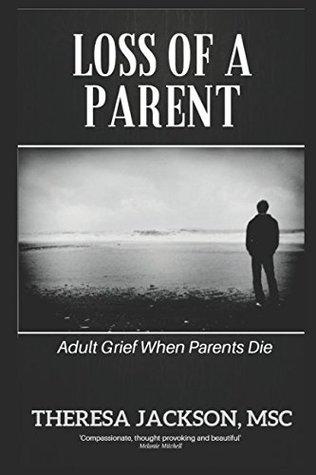
Download Loss of a Parent: Adult Grief When Parents Die - Burchett Jackson | PDF
Related searches:
On average, there are about 47+ years between grandparent and grandchild. With such an age difference, many people experience the death of at least one of their grandparents in childhood or early adulthood and for many, this will be their first experience with loss.
When a parent is dealing with the loss of the spouse, they are trying to figure out what to do, who they are and what the future will hold.
21 feb 2020 the death of your child, regardless of the cause or age, is painful and overwhelming.
Griefnet provides online support those dealing with grief and loss issues on either a personal or professional level. Griefnet's services include resource referral, support groups, a library of texts relating to grief and loss, memorial web pages, and a sister site for children in grief.
Expected grief versus complicated grief after the loss of a parent it’s hard to characterize “normal grief” because everyone’s experience is different, individually distressing. And it makes real sense for a person to experience a rough emotional process after losing a parent.
Those of us whose adult child has died have to contend with some unexpected responses including people believing that the pain of losing them is less than.
© 2013 our house grief support center when an adult experiences the death of a parent your parent has died. Whether their death was sudden or expected, hearing the news or being there with your mom or dad in their final moments is a shock to your system.
22 dec 2020 pdf this study compares maladaptive coping, measured as substance use, behavioral disengagement, self-blame, and emotional eating,.
In the year following the death of a parent, the apa’s diagnostic and statistical manual of mental disorders (dsm) considers it healthy for adults to experience a range of contradictory feelings, including but not limited to anger, rage, sadness, numbness, anxiety, guilt, emptiness, regret, and remorse. It’s normal to throw oneself into work after loss; it’s also normal to withdraw from activities and friends when a parent dies.
Buy loss of a parent: adult grief when parents die by jackson, theresa (isbn: 9781973365631) from amazon's book store.
We adult children often think that it is our responsibility to keep our parents healthy, to protect them from illness and save them from death – and we feel like failures when we discover that we cannot. We search for an explanation, and we beat ourselves up as we dwell on the what if’s and if only’s.
Even very young children feel the pain of bereavement, but they learn how to express their grief by watching the adults around them. After a loss—particularly of a sibling or parent—children need support, stability, and honesty. They may also need extra reassurance that they will be cared for and kept safe. As an adult, you can support children through the grieving process by demonstrating that it’s okay to be sad and helping them make sense of the loss.
The other side of grief is a series about the life-changing power of loss. These powerful first-person stories explore the many reasons and ways we experience grief and navigate a new normal.
Com is one of the oldest, if not the oldest, grief support community on the internet. Founded in 1997, it now supports a quarter million people annually from over 100 countries, from all walks of life. The focus is to provide grief support via community interaction.
Adult grief over loss of a parent when a parent dies, whether through old age, unexpectedly, or from disease, children are left with a range of emotions ranging from emptiness and loneliness to guilt and anger.
Young adults can be devastated by the death of a loved one during a disaster or crisis event. For example, losing one’s child can be paralyzing for parents. Parental grief can be a long lasting and powerful experience, and is influenced by the developmental task expected by the parents.
When a loved one dies, you might be faced with grief over your loss again and again — sometimes even years later. Feelings of grief might return on the anniversary of your loved one's death or other special days throughout the year. These feelings, sometimes called an anniversary reaction, aren't necessarily a setback in the grieving process.
Many people are experiencing grief during the covid-19 pandemic. Grief is a normal response to loss during or after a disaster or other traumatic event. Grief can happen in response to loss of life, as well as to drastic changes to daily routines and ways of life that usually bring us comfort and a feeling of stability.
When parents reach this juncture in life there are many issues the adult child must deal with as he/she begins the journey through grief. “loss” is the key word here: loss of function, loss of control, loss of independence.
Grief moves in and out of stages from disbelief and denial, to anger and guilt, to finding a source of comfort, to eventually adjusting to the loss.
Traumatic loss: surviving a parent's sudden, accidental death. When it is ignored or invalidated the silent screams continue internally heard only by the one held captive. When someone enters the pain and hears the screams healing can begin.
Coping with the loss of a close friend or family member may be one of the hardest challenges that many of us face. When we lose a spouse, sibling or parent our grief can be particularly intense. Loss is understood as a natural part of life, but we can still be overcome by shock and confusion, leading to prolonged periods of sadness or depression.
Elisabeth kübler-ross of the influential book “on grief and grieving: finding the meaning of grief through the five stages of loss,” said many adults — regardless of age — struggle with feeling like an orphan after a parent dies. “i try to remind them that you still stay connected with that person even in death.
My daughter was simply enjoying the last days of her summer holiday when she was hit with the realization, again,.
Author griefic posted on july 12, 2017 march 21, 2019 categories caregiver, complicated grief, dealing with loss, grief support, how to support those who are grieving, loneliness, loss from illness, loss of loved one, loss of parent, loss of spouse, the grief time line, uncategorized.
Almost 12 million americans bury a parent every year, but society tends to believe that because it is expected that our parents will die, bereaved adult children.
Grief after a murder the grief of murder may be even more difficult to deal with than loss from a disease because the answer to “why” is always a third party. It is important for people to understand that gradually, in your own time, you can begin to find some solace with what has happened.
It is because we have attached that we experience grief when a death or loss occurs. We learn to cope with grief throughout our lives in many ways we learn throughout life how to cope with grief. From that first time that a toddler is faced with being separated from a parent, they experience grief.
24 sep 2020 many bereaved parents who've suffered this type of loss describe their feelings of grief as shock, disbelief, indescribable pain, suffering, and that.
An adopted child may grieve the loss of their birth parents, even if said adults are alive. If a loved one has late-stage dementia� family members may feel as if the person they knew is gone.
Parents bring you into the world and it can feel lonely to no longer have.
Advocates, in collaboration with jeff's place, offers virtual support group designed for those who have experienced the loss of a loved one during the covid-19.
While everyone experiences grief in their own way, most survivors normally exhibit some/all of the following characteristics temporarily when responding to a loss in the days, weeks, or months after the death of a loved one: 1 tears, crying, or sobbing sleep pattern changes, such as difficulty falling asleep or too little/too much sleep.
I have seen scarcely a tear and normal behavior in a very short time even at the loss of a much-loved parent. I have seen people still wailing with grief years after a death.
Studies show that losing a parent can lead to increased risks for long-term emotional and mental health issues, such as depression, anxiety, and substance abuse.
Grief support groups for coping with loss of a parent, online bereavement forums offering help with grieving the death of a mother or father.
It can be partial or total, sudden or gradual, temporary or permanent. It can affect one ear what can we help you find? enter search terms and tap the search button.
The first two weeks then a lifetime when you lose your parent as an adult, there’s often much to do, such as contacting relatives, planning the memorial and funeral and sorting through.
It wasn't until freud—not sigmund, but his daughter anna—shed light on childhood grief that the subject captured the attention and validation of researchers.
Bereaved parents suffer an increased risk to both physical and mental health and exhibit an increased mortality rate.
Many adult daughters hold a story of their mothers that is based more on the daughters’ wounded memories than on the real truth of their mothers’ lives. For the brave at heart, the immediate aftermath of a mother’s death can be an opportunity for a more objective, compassionate understanding of her and, in turn, a resolution of long.
The orphaned adult: understanding and coping with grief and change after the death of our parents alexander levy (2000) losing our parents when we ourselves are adults is in the natural order of things, a rite of passage into true adulthood. But whether we lose them suddenly or after a prolonged illness, and whether.
A guide to put your grief into context when a parent dies to help you come to terms with your loss discover that your complex emotions and thoughts about losing a parent are normal in loss of a parent you will learn how your various emotions, changes to your life and the lives of those around you depend upon who you and are, the circumstances surrounding the death,.
Second, negative effects were stronger if filial bereavement was “off time”: children who lost a parent in younger adulthood experienced steeper declines in life.
When an adult experiences the death of a parent your parent has died. Whether their death was sudden or expected, hearing the news or being there with your mom or dad in their final moments is a shock to your system.
Com: loss of a parent: adult grief when parents die ebook: jackson, theresa: kindle store.
Becoming a parent enters you into a completely new and sometimes overwhelming world. Everything you don't want to happen will happen, and you might find yourself begging for privacy and alone time.
Sharing hers and others’ personal journeys of coming to terms with the loss of a parent, she hopes to help more bereaved adult children on their healing journeys. Loss of a parent will help you: gain some context by learning about the 7 stages of grief, which stage you might be in currently, and get an idea about what you might experience next.
8 played the role of the 'supportive adult' to the grieving parent, not allowing themselves to express feelings of anger, grief,.
For a child, the death of a parent, without support to manage the effects of the grief, may result in long-term psychological harm. This is more likely if the adult carers are struggling with their own grief and are psychologically unavailable to the child.
1) sibling grief is often misunderstood—by parents, families, friends, and counselors, even by the siblings themselves. So much focus is given to the parents of the lost child, to the children of the lost parent, to the spouse of the lost adult sibling.
The parent-child relationship no longer feels the same when a parent has to stop protecting, trusting, or helping a child in the same way due to addiction. The child-parent relationship becomes confused when a child has to care for a parent.
Seldom is a person 100% bad or abusive all the time so grief may occur due to the loss of the good parts of the relationship. This type of loss can also be difficult to obtain support from others during the grief because they may not have seen the positive aspects of the relationship.
Among older adults, grieving the loss of a loved one can become a common occurrence. Even the strong at heart have a difficult time coming to terms with this reality, and it’s important to support the older adults in our life as they experience grief and loss.
Few studies have explored the transition faced by midlife adults on the death of a parent. Even fewer have explored the differences between first and secon.
Losing a parent although most of us expect our parents to die before us, many adults are surprised by the complexity and depth of our grief when our mother or father dies. It can be very painful when your parent dies after a long and happy life. If they died unexpectedly or while younger this can be very difficult to cope with.
Parents of adult children who die may feel that their grief is discounted because society views their child as an adult and not really a child. At any age, facing the reality that a child has died before the parent and living without the child is difficult.
This hospice based in patchogue, long island offers bereavement groups for adults and children in suffolk county only, including young widows/widowers, adults grieving loss of parents or grandparents, survivors of suicide and others.
When an adult child loses a parent in later adulthood, it is considered to be “timely” and to be a normative life course event. This allows the adult children to feel a permitted level of grief.
Grief over a death can hit again years later in today's minding our elders column, a reader says they were recently struck by enormous waves of grief two years after both their parents died.
14 feb 2020 days shy of my 19th birthday i lost my mom to esophageal cancer. Three months after she was diagnosed, she was gone, and i went from having.
Grieving the loss of an adult child is likely to be a journey with many twists and turns. You may feel guilty or ask whether enough was done to help your child. You may be angry about the unfairness of your child’s death.
So the loss of this first important relationship reaches deep into your psyche – whether or not you were close to your parents as an adult. Because a loss of this magnitude produces feelings of grief, mourning will be involved.
- life circumstances of the parent at death will greatly affect how the adult grieves. The sudden death of a parent from a medical condition or accident will profoundly affect the grief response. Without an opportunity to prepare for loss, the grief experience can become intensified with responses of outrage, shock, anger and hopelessness.
It’s involved in divorce, death, layoffs, and any other losses. But for a young person, grief manifests around those experiences as well as the mourning experienced after first break-ups, friendships ending, suicide in schools, rejection or being disowned after coming out, and even rejection from college or professional dreams.
It’s natural for an outsider to think those thoughts when they hear an abusive parent died. Yet for the child of an abuser, regardless of their age, there is still grief. For the average person, the loss of a parent is a loss of memories.
How long will my adult child’s grief last? as with the grief of a grandparent there is no time table for the grief of a parent. Talking with those who have had a similar experience, counselling, reading about grief).
Parents are supposed to die before their kids and the feelings of grief that i have after 4 months are best reserved for these others. (i know better after having had face-to-face grief counseling.
Middle aged adults, similar to young adults, can be badly impacted by the sudden loss of a loved one during a disaster or crisis event. They might grieve the loss of their child(ren) and potential future grandchildren. They might feel guilty for not having been able to protect their child(ren).
“a later crisis or loss in adult life may unmask an underlying vulnerability that has been lurking beneath the apparently normal surface of their lives for years. ” a vague sorrow follows adult survivors who have not come to grips with the reality of their childhood abuse. The dark and heavy feeling has been with them all their life.
A bereavement group for adult children who have experienced the death of a parent. The death of a parent is one of the most discounted losses in our society. This group will give you a safe place to share your grief, your pain and learn how to heal.
Grieving is not just something that happens after someone passes away. Preparing for a loved one’s end of life or a major loss is what defines anticipatory grief. While it shares some commonalities with conventional grief, some symptoms are unique to anticipatory grief.
If this was your second parent to die, you may feel especially sorrowful; becoming an “adult orphan” can be a very painful transition. You may also feel sad because the loss of a parent triggers secondary losses, such as the loss of a grandparent to your children.
That rather than the one lost (spouse, parent, son, daughter or pet etc) may be a fairer comparison – but even this may breed nothing more than opinion. I can only imagine the deviational loss and grief that is to follow for the young son of the now deceased christopher and dianna reeve.
The greatest loss is the tragic death of a parent, grandparent, relative or close family friend. And there are other losses: kids and adults alike share in the losses of school or work, routine, seeing friends and family, missing special events such as birthdays, sports, concerts, prom, graduation, and other.
When a family member dies, children react differently from adults. Preschool children usually see death as temporary and reversible,.
A phenomenon of a two-staged life transition period was unexpectedly observed which suggests adult children may grieve for their first parent’s death in a filtered way through their concern for the grief of the remaining parent; and then, on the death of the second parent, grieve wholly for both parents.
Users can interact in the general discussion group, or they can join communities for people who have experienced specific types of grief, such as the loss of a spouse, someone to cancer, a parent, or sudden loss. The website offers many helpful links and resources, as well.
Older adults experience grief at a higher rate than younger adults or children. Spousal loss is common in older adults as well as the death of friends, siblings and cousins. 5 million people die in the united states annually, each leaving an average of five grieving people behind.
Part of our behavioral health resources, this is a broad overview of our treatment plan for the treatment of grief and loss. Age- and gender-specific resources are available for adults and juveniles (males and females).
Everyone grieves a loss due to death in their unique way, and there is no timetable for grief. However, most grievers experience some/all of these reactions most profoundly in the immediate days/weeks following a loss but gradually return to a new normal in the weeks/months afterward. You won't entirely forget your loved one as if they never existed, but in time, you will learn how to cope with their absence and the scar on your heart and soul.
The loss of a parent is never an easy thing, but often the death of an estranged parent or one who has been absent from the children causes feelings that are difficult for the child to process. The delicate balances in a parent-child relationship coupled with the intense emotions that accompany the grieving process can be overwhelming to handle.
The pain of loss can feel overwhelming, but there are healthy ways to cope with your grief and learn to heal. Millions rely on helpguide for guidance and support during difficult times.
I’ve also learned the types of helpful things their adult children have done to help them cope. On the other hand, i’ve heard examples of many ways adult children handled their surviving parent’s grief that were not so helpful.
She leads us through four stages that most adults experience at some time: caring for a dying parent, mourning the loss, caring for the parent left behind, and finding new meaning beyond grief. The orphaned adult: understanding and coping with grief and change after the death of our parents by alexander levy, 2000.
The stress and anxiety that accompany prolonged grief can be deadly. Research has shown that those experiencing caregiver strain have a 63 percent higher mortality risk than their non-caregiving counterparts. Yes, the grief we experience just before and after a death is devastating.
Post Your Comments: