Full Download Insects: Evolutionary Success, Unrivaled Diversity, and World Domination - David Rivers | PDF
Related searches:
(PDF) Insects: Evolutionary Success, Unrivaled Diversity, and World
Insects: Evolutionary Success, Unrivaled Diversity, and World Domination
Insects: Evolutionary Success, Unrivaled Diversity, and - NHBS
The evolutionary success of insect predation and parasitism / The
Insects : evolutionary success, unrivaled diversity, and
Insects Evolutionary Success, Unrivaled Diversity, and World
Insects : Evolutionary Success, Unrivaled Diversity, and
Trait evolution is reversible, repeatable, and decoupled in the
Adaptive Radiation in Insects and Plants - Oxford Academic Journals
Insects And Evolution NC State News
Plant polyploidy and non-uniform effects on insect herbivores
Insect appendages and comparative ontogenetics - ScienceDirect
8.2 The evolution of insects and their role in terrestrial ecosystems
In Dialogue with Sara Lewis and Jeff Skevington Princeton
Diapause and quiescence: dormancy mechanisms that contribute
Tergal and pleural wing‐related tissues in the German
Insects: evolutionary success, unrivaled diversity and world
Planet of the Bugs: Evolution and the Rise of Insects, by
Solved: how has the characteristics of insects contributed to their evolutionary success? - slader.
The success of insects as a group is also reflected by the diversity of habitats in which they live. Insects are most numerous in terrestrial environments such as deserts, forests, and grasslands. They are likewise numerous in freshwater habitats such as ponds, lakes, streams, and wetlands.
Written by joe ballenger i read a few things on the size of insects and the tough shell – is the beetle shell related to beetles' evolutionary success?.
The evolutionary success of insect predation and parasitism / the insects. Sister group to apocrita, and probably all are parasitic on wood-boring insect larvae.
The genetic basis of innovations and evolutionary success / study in genome biology arthropods, a group of animals including next to insects also spiders or crustaceans, make up the most species-rich and diverse group of animals on earth, with numerous adaptations that have allowed them to exploit all major ecosystems.
The first-ever comprehensive evolutionary tree of insects was recently created by a group of researchers from around the world. This phylogenetic tree, built from genetic sequencing and fossil.
The full story of success for each spans over 165 million years and involves global events as dramatic as rifting continents, fluctuating climates, and extraterrestrial impacts, as well as the world’s blossoming. The tale of insect evolution is lengthy and we should not relegate it to titillating soundbites.
10 aug 2012 the evolution of metamorphosis remains somewhat mysterious, but insects on the planet speak for its success as a reproductive strategy.
6 nov 2014 insects evolved earlier than previously suspected, and may have helped to shape wings were a key to insect success, kjer said. Coding genes life sciences/evolutionary biology/paleontology/fossil.
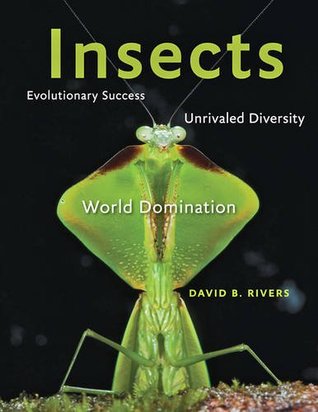
About this book designed as an introduction to the intriguing world of insect biology, insects: evolutionary success, unrivaled diversity, and world domination examines familiar entomological topics in nontraditional ways.
To understand how the genes evolved in insects, the scientists generated specific mutants to mimic the evolutionary process and show that a single mutation in the same central regions of the human.
There is no evidence that suggests that the insects were a particularly successful group of animals before they evolved to have wings.
What are 3 characteristics of insects that have contributed to their evolutionary success.
The evolutionary success of insects is largely due to their exoskeleton. This external skeleton consists of three tagmata (body sections): head, thorax and abdomen. The extraordinary diversity of insect form and function has evolved upon this simple body plan (hickman, 2011).
The time and date of the origin of insects and their pattern of evolution and survival over millions of years is revealed in a new study, buoyed by the success of this study the research.
What genetic mechanisms are responsible for the evolutionary success of arthropods, which also include insects, for example? a team of international researchers studied these species and tracked the evolutionary origin of key adaptations over 500 million years.
23 jan 2018 the evolution of wings not only allowed ancient insects to become the but also propelled their rise to become one of nature's great success.
Episodes in insect evolutionbiologists often refer to the ''success'' of a group of organisms, which typically means one of two things: evolutionary success-measured in terms of species diversity, geological duration, and/or geographic spread-and ecological success, as measured in terms of the impacts of a species or group of species upon an ecosystem.
24 mar 2020 specialized castes are seen as phenotypic innovations necessary for ecological and evolutionary success in social insects.
Insects are the most successful group of organisms in the history of life.
26 mar 2018 insects took to the skies much earlier, but there is scant fossil diverse and successful animal classes, a position they still hold today.
Most major groups of insects appeared in a burst of evolution about 350 million years ago such as grasshoppers and cockroaches. Many common groups of insects such as flies, wasps and beetles.
Chapter 5 'dressed' for success: the insect body plan overview key concepts jointed, boneless, and proud of it: an introduction to the phylum arthropoda arthropods are old! insects and their kin phylogenetic surf 'n' turf: arthropods dominate land and sea less is more: characteristics of the insecta why have insects been so successful?.
New insects are found and named at a rate of about 2,000 a year. In regards to weight, insects account approximately 85 percent of all animal life types, all the world’s insect weighs more than 12 times all the world’s individuals. Evolution of insects insects are an ancient group of animals.
14 feb 2018 omnivorous species that ate mostly plants and modestly consumed insects were the most successful, evolutionarily.
Plant interactions may play in the long-term evolution of insect and plant lineages� and opportunity may influence long-term evolutionary success.
23 oct 2019 the cuticle plays an important role in the evolutionary success of insects. Many studies on insect cuticles have reported a soft, resilin-rich.
Insects: evolutionary success, unrivaled diversity, and world domination.
The key remaining questions of evolutionary biology are more ecological than judged by taxonomists working independently on the insects and vertebrates.
Part of the story behind the success of the insects is their remarkable adaption to a wide range of environments.
6 aug 2015 a new family of glycerol transporters may help to explain why insects are the most successful group of organisms in the history of life.
Evolution of the insects ancestors of insects, spiders, and centipedes hit land.
Insects: evolutionary success, unrivaled diversity, and world domination available in hardcover, nook book.
Insect success can be summed up by the low volatility anomaly, the result of high speciation rates coupled with low natural levels of extinction. This has been brought about through often high reproductive capacity, brief average generation time, large effective population size, and an amalgamation of traits that work synergistically.
Bernays published evolution of feeding behavior in insect herbivores find, read and cite all the research you need on researchgate.
Insects were the first animals to adapt to life on the land and in the air and became such an evolutionary success that they are the most diverse class of animal life on earth today.
Evolution begets diversity, and insects are the most diverse organisms in the history of life, so insects should provide profound insight into evolution. By most measures of evolutionary success, insects are unmatched: the longevity of their lineage, their species numbers, the diversity of their adaptations, their biomass, and their ecological.
How can this evolutionary success be explained? answer� the insects are the animal group with most diversity of species.
Arthropods represent the evolutionary pinnacle of the protostomes. It seems likely that arthropods evolved from the same root as the annelids and that the three main lineages of arthropods - the chelicerata, the crustacea and the insecta - evolved independently from a common ancestor.
Mosquitoes are insects belonging to the order diptera and family culicidae. They are distributed worldwide and include approximately 3500 species, of which about 300 have medical and veterinary importance. The evolutionary success of mosquitoes, in both tropical and temperate regions, is due to the various survival strategies these insects have developed throughout their life histories.
17 feb 2017 it could explain why, when looks are deceiving, the insects are still able to for mates from the same species – a key to evolutionary success.
Yet such behavior seemed to clearly violate the concept of natural selection and survival of the fittest, if “fittest” means the individual with the greatest reproductive success.
Another important success has been resolution of the relationships of insects that undergo complete metamorphosis (with larval, pupal, and adult stages – called holometabola). Holometabola includes the four superradiations that make insects truly diverse: wasps, beetles, moths and flies.
Why beetles are such an evolutionary success may bugs are an evolutionary window into why beetles are considered so successful, from their armor-plated bodies to protect vital organs, to their.
This has been due, at least in part, to the versatility of their articulated appendages, which allow a wide range of behaviors and novel feeding opportunities.
The phrase “evolutionary success” sometimes appears in scientific productions. However, the concept seems to be based primarily upon quantitative data.
12 jan 2018 like insects on land, many of the 70,000 species of crustaceans (crabs, lobsters and their relatives) eat plants and seaweeds in the kelp forests.
May bugs are an evolutionary window into why beetles are considered so successful. From their armor-plated bodies to protect vital organs, to their highly.
In the absence of such a uniform release, the extreme evolutionary success of polyploid plants is probably due to factors other than escape from herbivory.
Biological success, as measured in terms of darwinian fitness, refers to the ability of an organism to survive and reproduce successfully. Differential reproductive success is the key to a species’ evolution over time. Individuals with the most favorable traits in a particular environment will be able to survive and leave more offspring.
The acquisition of wings has facilitated the massive evolutionary success of pterygotes (winged insects), which now make up nearly three‐quarters of described metazoans. However, our understanding of how this crucial structure has evolved remains quite elusive.
Buy insects: evolutionary success, unrivaled diversity, and world domination on amazon.
Buy insects (9781421421704): evolutionary success, unrivaled diversity, and world domination: nhbs - david b rivers, johns hopkins university press.
Student number: word count: 750 words the evolutionary success of insects is largely due to their exoskeleton.
26 feb 2016 a particularly successful original invasion that serves as the source of subsequent invasions could be the result of an evolutionary shift in this.
The success of arthropods was in part due to their resilient exoskeleton and their ability to rapidly diversify and occupy new emerging habitats; they followed the plants out of the oceans, and were the first to claim the skies. Shaw even proposes that flying insects may have been a major selective force in the evolution of flight in dinosaurs.
26 aug 2019 surely some of insects' evolutionary success relies on the transformational power of metamorphosis.
Millions of years ago 500 400 300 200 100 present day wings can fold over backno external wing developmentfeeding on flowering plants diversification of pollinators of flowering plantssocial behavior ancestors of insects, spiders, and centipedes hit landfirst insects first winged insects –– (moths) (bees, ants)- wingless – wings can’t fold.
Post Your Comments: