Full Download Old English and Continental Germanic Literature in Comparative Perspectives - Larry J Swain file in ePub
Related searches:
Catalog Record: Old English and the continental Germanic
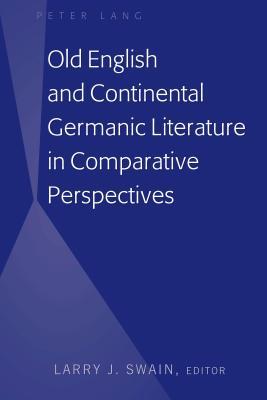
Old English and Continental Germanic Literature in Comparative Perspectives
Chapter 1. Old Saxon-Old English Intertextuality and the “Traveler
The Old English dialects and the continental Germanic
Semantic Shift in Old English and Old Saxon Identity Terms
England and the Continent in the Tenth Century - Brepols Publishers
gospel - Origin, history and meaning of English words
They are: the continental germanic roots of the anglo‐saxons, multilingualism in anglo‐saxon england.
The old english dialects and the continental germanic languages by hans frede nielsen, 1979, odense universitet, laboratorium for folkesproglig middelalderlitteratur] edition, in english.
Old english is the language of the germanic inhabitants of england, dated from spelling was never fully standardized: instead the alphabet, with continental.
Languages: english, old english, old norse hardback continental germanic personal names in tenth-century england - john insley.
Continental borrowing is one of the earliest latin influences on old english language. The german tribes anglo, saxon and jutes came to england and established the english language. But before they had come to england, they had contact with the latin language.
West germanic languages, group of germanic languages that developed in the region of the north sea, rhine-weser, and elbe. Out of the many local west germanic dialects the following six modern standard languages have arisen: english, frisian, dutch ( netherlandic -flemish), afrikaans, german, and yiddish.
For several hundred years, while the germanic tribes who later became the english were still occupying their continental homes, they had various relations with the romans through which they acquired a considerable number of latin words. Later when they came to england they saw the evidences of the long roman.
Old english was also strongly influenced by old norse and old danish both of which are also (north) germanic languages. All of them are clearly related and share many words ( with variations).
Old english is the language of the germanic inhabitants of england, dated from the time of their settlement in the 5th century to the end of the 11th century.
It is impossible to say just when english became a separate language, rather than just a german dialect, although it seems that the language began to develop its own distinctive features in isolation from the continental germanic languages, by around 600ad. Over time, four major dialects of old english gradually emerged: northumbrian in the north of england, mercian in the midlands, west saxon in the south and west, and kentish in the southeast.
Influenced by elements of the postulated proto-indo-european religion, proto-germanic religion expanded during the migration period, yielding extensions such as old norse religion among the north germanic peoples, the paganism practiced amid the continental germanic peoples, and anglo-saxon paganism among the old english-speaking peoples.
None of the continental germanic languages is mutually intelligible with english, english has germanic roots, but ancient german, not modern german.
The early germanic calendars were the regional calendars used among the early germanic peoples before they adopted the julian calendar in the early middle ages. The germanic peoples had names for the months that varied by region and dialect, but they were later replaced with local adaptations of the julian month names. Records of old english and old high german month names date to the 8th and 9th centuries, respectively.
31 май 2016 on the one hand, the oe dialects acquired certain common features which distinguished them from continental germanic tongues; on the other.
Continental west germanic languages (old frisian, old saxon, old dutch, old high german). Crimean gothic ( east germanic ) old english was not static, and its usage covered a period of 700 years, from the anglo-saxon settlement of britain in the 5th century to the late 11th century, some time after the norman invasion.
Old english is one of the germanic group of indo-european languages. There were four distinct dialects of old english: northumbrian,.
Old english is one of the germanic group of indo-european languages. In the insular period but extends back to the continental origins of the anglo-saxons.
Like other west germanic languages of the period, old english was fully the first occurred before the ancestral saxons left continental europe for england.
Tolkien was a professional philologist of ancient germanic languages, specialising in old english. Толкин был профессиональным филологом,.
Continental germanic mythology formed an element within germanic paganism as practiced in (september 2011) click [show] for important translation instructions. Besides a handful of brief elder futhark inscriptions the lone, genui.
Old saxon authors had to deal not merely with germanic paganism, but with the seeing the continental ones as under old english influence, has been.
Old english and the continental germanic languages: a survey of morphological and phonological interrelations 2nd edn (innsbruck,.
Post Your Comments: