Download Children in Genocide: Extreme Traumatization and Affect Regulation (Psychology, Psychoanalysis & Psychotherapy) - Suzanne Kaplan file in ePub
Related searches:
Children in Genocide: Extreme Traumatization and - Routledge
Children in Genocide: Extreme Traumatization and Affect Regulation (Psychology, Psychoanalysis & Psychotherapy)
Children in Genocide: Extreme Traumatization and - Amazon.com
Children in genocide: extreme traumatization and the 'affect propeller'
Children in Genocide: Extreme Traumatization and the 'Affect
Children in Genocide: Extreme Traumatization and - Karnac Books
Children in genocide: Extreme traumatization and the 'affect
Consequences of Genocide and War for Rwanda's Children HRW
Children in genocide: Extreme traumatization and the ‘affect
Children in Genocide: Extreme Traumatic and Affect Regulation
PEP Web - Children in Genocide: Extreme Traumatization and
Children in genocide Extreme traumatization and the 'affect
Book review: Children in genocide: Extreme traumatization and
Genocide and Mass Violence in the Age of Extremes - De Gruyter
Mass Genocide of Mohawk Children by UK Queen and Vatican
The Psychology of Genocide, Massacres, and Extreme Violence
Ethiopia: Amhara Genocide and Ethnic cleansing
With a starting point in the holocaust and in the genocide in rwanda 1994. She to develop the knowledge about children and extreme traumatization.
May 29, 2020 the children of detained rwandan genocide suspect felicien kabuga accused french authorities of violating his fundamental human rights.
Oct 21, 2019 mussa uwitonze spent the better part of his childhood in an orphanage in rwanda.
The massacre left many surviving children, such as 6-year-old liberatha ingabrire, as the heads of their families.
The author bases this paper on extensive research concerning children in genocide with a starting point in the holocaust and in the genocide in rwanda 1994. She demonstrates indicators for psychological phenomena concerning the child survivors' affect regulating that appeared in life histories presented in videotaped in‐depth interviews.
She demonstrates indicators for psychological phenomena concerning the child survivors' affect regulating that appeared in life histories presented in videotaped.
This book deals with affects and memories from extreme traumatization of jewish survivors, who were children themselves during the holocaust, and teenagers.
In her lecture, “children in genocide: extreme traumatic and affect regulation,” kaplan discussed her interviews with child survivors of the holocaust and rwandan teenagers orphaned in the genocide. Noting that the experience of trauma is consistent across cultures and periods, kaplan explained that these.
I do not call it ‘‘savagery’’ because highly civilized groups are as violent as the ‘‘savages’’they disdain. If there is a child of this marriage, it would be a new field of study, which i call forensic ethology. I was inspired to write this book by reading romeo dallaire’sshake hands.
Despite extreme poverty and the legacy of the 1994 genocide, rwanda has already halved the number of deaths of children.
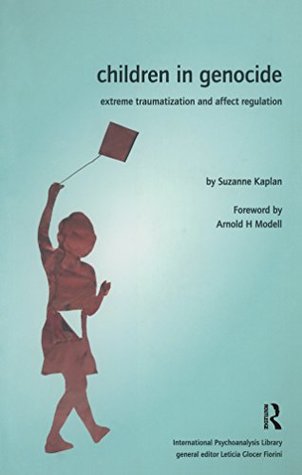
In children in genocide: extreme traumatization and affect regulation (2008), suzanne kaplan explores the affects and memories of individuals who have survived extreme traumatization during their childhood, specifically jewish survivors of the holocaust and teenagers who survived the genocide in rwanda in 1994.
Apr 3, 2003 not only did they rape, torture, and slaughter children along with adults in massacre after massacre around the country.
The effects of genocide on youth include psychological and demographic effects that affect the transition into adulthood.
At one extreme, ethnic cleansing is close to forced deportation or what has been called “population transfer;” the idea is to get people to move, and the means are meant to be legal and semi-legal. At the other extreme, ethnic cleansing and genocide are distinguishable only by the ultimate intent.
Background: the health consequences of genocides on children of survivors are increasingly discussed but conclusions have been.
The author bases this paper on extensive research concerning children in genocide with a starting point in the holocaust and in the genocide in rwanda 1994. She demonstrates indicators for psychological phenomena concerning the child survivors' affect regulating that appeared in life histories presented in videotaped in-depth interviews.
Children in genocide: extreme traumatization and the ‘affect propeller’ kaplan, suzanne 2006-06-01 00:00:00 the author bases this paper on extensive research concerning children in genocide with a starting point in the holocaust and in the genocide in rwanda 1994. She demonstrates indicators for psychological phenomena concerning the child survivors' affect regulating that appeared in life histories presented in videotaped in‐depth interviews.
Apr 15, 2019 drawing on a corpus of accounts written by survivor children in 2006, this article looks at the tutsi genocide through the eyes of children,.
Suzanne kaplanis a practicing child and training psychoanalyst. Researcher at the hugo valentin centre, uppsala university, sweden.
(2006) children in genocide – extreme traumatization and the ‘affect propeller’, int j psychoanal vol 87 part 3; pp 725-46. Children in genocide: extreme traumatization and affect regulation. London, uk: international psychoanalytical association and karnac books.
Some child victims of the genocide who were able to escape the khmer rouge and flee to other countries were able to stay on track with their transition into adulthood. Many children were put in schools right away in order to keep them on the same academic level as their peers.
Children targeted in the genocide countless thousands of children were slaughtered during the rwandan genocide.
Those who planned and executed the genocide of 1994 violated children's rights on a massive scale. Not only did they rape, torture, and slaughter children along with adults in massacre after.
Annett acknowledges the close parallels between the october 1964 personal child genocide and possible ritual killings of 10 aboriginal children by elizabeth windsor, head of state of canada and head of the church of england, and the child genocides occurring during the same period at the mohawk institute.
We store cookies on your device that are necessary for our website to function properly (necessary cookies).
This book deals with affects and memories from extreme traumatization of jewish survivors, who were children themselves during the holocaust, and teenagers who survived the genocide in rwanda in 1994, presenting an illustration of how complex affect regulating is for traumatized individuals.
Children in genocide: extreme traumatization and the ‘affect propeller’ suzanne kaplan the author bases this paper on extensive research concerning children in genocide with a starting point in the holocaust and in the genocide in rwanda 1994.
Post Your Comments: