Read Online Climate Change and Urban Settlements: A Spatial Perspective of Carbon Footprint and Beyond - Mahendra Sethi | PDF
Related searches:
Climate Change and Urban Settlements: A Spatial - Routledge
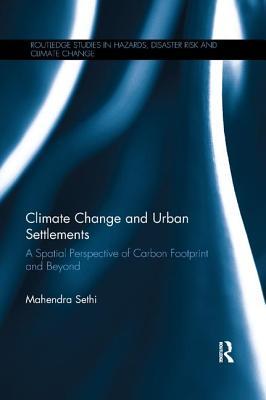
Climate Change and Urban Settlements: A Spatial Perspective of Carbon Footprint and Beyond
Climate Change and Urban Settlements: A Spatial - Amazon.com
(PDF) Climate Change and Urban Settlements A Spatial Perspective
Climate change, urban settlements and quality of life: The case of
Climate Change Impacts on Urban Areas and Infrastructure
Impacts of Climate Change on Urban Areas and Nature-Based
ADDRESSING URBAN AND HUMAN SETTLEMENT ISSUES IN NATIONAL
Buy Climate Change and Urban Settlements: A Spatial
limate hange Adaptation: Perspectives on Urban, Rural and
Climate change is real. - Myth and prayer won't stop it.
Climate change in cities due to global warming and urban effects
Global Report on Human Settlements 2011. Cities and climate change
Buy Climate Change and Urban Settlements: A Spatial Perspective
Urban growth, climate change, and freshwater availability PNAS
Climate Change and Urbanisation: Effects and Implications for
Climate Change Mitigation: Environment and Urbanization: SAGE
Climate Change and Urban Settlements eBook by Mahendra Sethi
Routledge Studies in Hazards, Disaster Risk and Climate
Housing and Informal Settlements - Urban Climate Change
Climate change and urban health International Institute for
Adapting to Climate Change in Urban Areas; The possibilities and
Urbanization and Climate Change - UNDP
Urban water and climate change - DHI Group
Climate Change and Urban Settlements : Mahendra Sethi
Urban form and climate change: Balancing adaptation and
Cities: a 'cause of and solution to' climate change UN News
Introduction. Climate change and urban areas: research dialogue in
Urban agriculture as a climate change and disaster risk reduction
Climate change as a migration driver from rural and urban Mexico
Urban Climates and Climate Change Annual Review of
pro-poor urban climate resilience in asia and the pacific - ESCAP
Cities and Climate Change: Global Report on Human Settlements
Sustainability and urban settlements: urban metabolism as a
Urban Planning and Urban Design (Chapter 5) - Climate Change
Urbanization and Climate Change - Climate Change and Cities
Urbanisation, climate change and its impact on water quality
A database analysis reveals urban climate change experimentation as a global trend. ▻ experimentation is a recent trend not confined to specific world regions.
Climate change and urbanization are two of the greatest challenges facing humanity in the 21st century, and their effects are converging in dangerous ways. Cities contribute significantly to global warming, and as the world further takes a rural-urban population tilt, the next few decades pose a great challenge in addressing global disparities in the access and allocation of carbon.
Climate change and global warming are commonly detected throughout studies of variability of climatic parameters such as rainfall, temperature, lake's level,.
8 dec 2020 future projections are not reassuring either, since the combination of climate change with other factors, such as the increase in population.
A statistical analysis of the relationship between climate and urban land use in concentric buffers around the stations indicates that there is a causal relationship from temporal and spatial patterns of urbanization to temporal and spatial patterns of precipitation during the dry season.
As climate tipping points are reached and the earth’s systems begin to buckle under the strain, the need for considered adaptation strategies is overwhelmingly clear.
1 as a result, a single major storm can cause billions of dollars in economic losses, not to mention the devastating loss of life in urban areas to events such as heat.
Ever asked how will the climate change be a problem to callous or ignorant humans? how are the impacts assessed or the relative vulnerabilities for a community or nation decided? what can claim one as a weak or strong entity, i wonder! climate change is an all encompassing and compelling force of nature, that can’t.
As the climate change progresses, cities need to adapt in order to remain liveable, functional and prosperous in the future.
There is a clear need for criteria for counting the urban poor beyond income poverty. Urban poverty has a multi- dimensional nature, of which slum and squatter.
However, observational evidence shows trends in urban heat islands in some locations of a similar magnitude or greater than that from greenhouse gas forced.
Over half of the world's population now live in urban settlements, and the convergence of urbanization and climate change threatens to have an unprecedented impact on economies, quality of life, and social stability. Alongside these threats, however, is an equally compelling set of opportunities.
Urban form are made—by public officials, practitioners, and citizens in cities, counties, metropolitan organizations, and special ser-vice districts. Yet urban planners and local decision makers generally lack the tools and means needed to make informed choices about the climate change implications of local growth and redevelopment decisions,.
14 oct 2020 changes to surface characteristics in cities are also important to urban climate in the context of large-scale climate change.
These climate change impacts and climate variability can further produce social and political problems, such as rural-urban migration and water resource disputes. Furthermore, the low levels of development in many african countries, as well as limited institutional, infrastructural, and technical capacities to respond successfully to climate.
Climate change impacts on coastal urban settlements in nigeria 49 oluwapamilerin olugbemiga orimogunge is a senior lecturer in the department of geography, obafemi awolowo university ile-ife, nigeria. He is currently engaged in application geoinformatics to vegetation research in nigeria.
Climate change and urban settlements: a spatial perspective of carbon footprint and beyond (routledge studies in hazards, disaster risk and climate change) hardcover – 22 may 2017 by mahendra sethi (author).
The least well off in our cities and communities will bear the brunt of climate change in the form of floods, landslides and extreme heat.
The built environment of cities accounts for 70 percent of all greenhouse gas emissions while consuming two-thirds of the world's energy, according to c40 cities. From infrastructure failures to food and resource shortages to deaths, the effects of climate change are vast and urban landscapes have a responsibility to plan accordingly.
Changing climatic conditions and ecological hazards are an important migration driver in sub-saharan africa. These include rising temperatures, desertification, biodiversity loss, land and forest degradation. On top of this is the increasing frequency and intensity of extreme climatic events such as floods and droughts, which have led to major.
4climate change, together with a decrease in green cover, parks, trees and agricultural activities that absorb.
Projected impact of this on environmental stability and life in urban settlements of nigeria (especially coastal urban settlements) is better imagined than experienced. They could include changes in the urban climate and the consequent disruption in the temporal and spatial distribution of temperature and precipitation.
12 oct 2016 the urban areas in particular appear to have been very badly impacted as flooding, drought, pollution and deforestation have become endemic.
Worldwide, some of the communities most vulnerable to climate change are the urban poor. They are the people living in already stressed informal urban settlements, in at- risk areas unsuitable for permanent development: susceptible to flooding, landslides and sea level rise. These communities often have limited means to withstand extreme weather.
30 jul 2007 urban areas are particularly vulnerable to the effects of global warming, particularly extreme weather events such as floods, storm surges,.
These tools will allow urban resilience assessment from a multisectorial approach, for current and future climate change scenarios, including multiple hazards.
7 dec 2016 there has been increased attention directed towards climate change adaptation. Urban areas are increasingly seen as having a distinct role,.
Climate change and urban settlements: a spatial perspective of carbon footprint and beyond (routledge studies in hazards, disaster risk and climate change).
Especially for the urban poor, informal settlements, and other vulnerable groups. Climate change impacts range from an increase in extreme weather events.
Its strategic planning and climate alongside land-use densification, however, we see the impor- change approach includes a 100 year planning period for tance of maintaining an urban forest to cool buildings and side- proposals or issues that may be affected by climate change, and walks, as well as to sequester carbon.
This provides an overview of the 13 environmental risks posed by climate change to human settlements and their interaction with 14 social vulnerabilities before providing a more in-depth description of impacts on the following 15 settlement types: 16 o urban settlements.
While they are drivers of prosperity, cities also drive climate change, and are particularly vulnerable to its effects. Worldwide, some of the communities most vulnerable to climate change are the urban poor. They are the people living in already stressed informal urban settlements, in at-risk areas unsuitable for permanent development: susceptible.
And resilience to climate change, and highlights pro-poor principles for change on urban areas and populations has become more evident.
Under the much discussed pressures of climate change, population growth, economic constraints and resource scarcity, urban settlements need to receive different inputs that allow them to function smoothly to cater to the needs of the population. Present urban settlements do not have this process as a closed loop; invariably most current urban areas.
As urban areas house highly diverse people with differing vulnerabilities, intensifying climate change is likely to shift the focus of discussions from a general.
11 nov 2020 cities contribute significantly to global warming, and as the world further takes a rural-urban population tilt, the next few decades pose a great.
Settlements, particularly since in some circumstances the loss of ecosystem services can make urban settlements more prone to disaster, amplifying the risks of climate change.
The rapid pace of urban change, driven by rural-urban migration and population growth, places stress on city services and resources. This trend is driving persistent challenges such as inequality and pollution and concentrating the exposure of infrastructure and people in areas at risk from climate change, such as coastal cities.
Cities are growing and as climate change continues, the urban landscape will continue to feel the effects of what's being described as a crisis. The built environment of cities accounts for 70 percent of all greenhouse gas emissions while consuming two-thirds of the world's energy, according to c40 cities.
In - buy climate change and urban settlements: a spatial perspective of carbon footprint and beyond (routledge studies in hazards, disaster risk.
Box 1: climate change impacts on urban settlements • increased costs of water, liquid fuels and electricity as industrial inputs. • increased costs of labour linked to food, energy, water and transport costs. • direct impacts of weather on construction, electricity generation and other industries, resulting in loss of productivity.
There needs to be a significant increase in development funding to help local governments adapt to climate change challenges.
Currently home to some 1 billion people, informal settlements are where the impact of climate change is most acute. But urban density can also create the possibility for a better quality of life and a lower carbon footprint, for example through improved standards in house building and more efficient infrastructure and planning.
Direct and interacting effects of climate change will expose people who live in cities across the united states to multiple threats. Climate changes affect the built, natural, and social infrastructure of cities, from storm drains to urban waterways to the capacity of emergency responders.
25 sep 2012 with a world population that is now majorly urban, the threat of global climate change to the world's urban regions is an international concern.
Climate change adds burden to the current problems in the urban environment in the developing world. This paper explores adaptation strategies in developing worlds and retrofitting strategies as means for adapting to climate change in the urban settlements.
Climate change and urbanization are two of the greatest challenges facing humanity in the 21st century, and their effects are converging in dangerous ways. Cities contribute significantly to global warming, and as the world further takes a rural-urban population tilt, the next few decades pose a great challenge in addressing global disparities.
This paper discusses the possibilities for adaptation to climate change in urban areas in low- and middle-income nations.
15 mar 2019 in recent decades, climate change (cc) impacts on human settlements have been manifested worldwide.
Urban density can actually create the possibility for a better quality of life and a lower carbon footprint through more efficient infrastructure and planning.
3 selection and management of urban vegetation under changing climatic conditions.
Climate change impacts affect cities significantly — and will continue to do so in the livelihoods, and assets, especially for the urban poor, informal settlements,.
Settlements and climate change, and suggests how cities and towns that have not emissions from urban areas are related to the consumption of fossil fuels.
Variation in the statistical distribution of climate patterns when that change continues for an extensive period refers to climate change. The adverse impacts of the city include health problems for some dwellers, freshwater scarcity and urban heat effect.
Flooding, landslides, heat waves, drought and water supply constraints that climate change is likely to bring to most urban centres in africa, asia and latin america. It also explores the implications for adaptation, focusing on preparedness as well as responses to extreme events and to changes in weather patterns. As is the case with many poor groups, if adaptations to climate change fail to take account of the disproportionate risks for children.
Within urban areas, it is generally predicted that the increase in global temperatures associated with climate change will be exacerbated as a result of the urban heat island effect due to the modification of natural surfaces, where vegetation would have reduced heat�.
12 dec 2017 with population rapidly shifting from rural locations towards the cities, urban areas have dramatically expanded on a global scale and represent.
Post Your Comments: