Read The Treatment of Wounds: Its Principles and Practice, General and Special (Classic Reprint) - Lewis S. Pilcher | PDF
Related searches:
Principles of Wound Management and Wound Healing in the Exotic
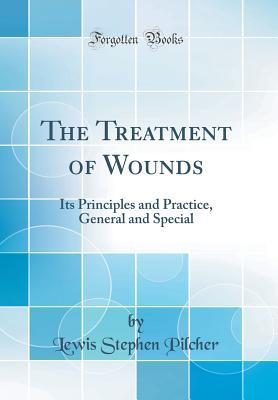
The Treatment of Wounds: Its Principles and Practice, General and Special (Classic Reprint)
8 Principles of wound closure and coverage Musculoskeletal Key
(PDF) Principles and Practice of Wound Care - ResearchGate
The treatment of wounds; its principles and practice, general
Clinical Guidelines (Nursing) : Wound assessment and management
Principles of Wound Healing - Skin and Wound Care - LibGuides at
Wound dressings: principles and practice
Prevention and management of wound infection - WHO World
(PDF) WOUND HEALING AND IT’S IMPORTANCE- A REVIEW
Wound management 3: the assessment and treatment of wound
Simple Wound Management and Suturing. Wound care info Patient
Wound and Pressure Ulcer Management - Hopkins Medicine
Prevention and Management of Acute and Chronic Wounds
Chronic Wounds: Evaluation and Management - American Family
Open Wound: Types, Treatments, and Complications - Healthline
Overview of Wound Healing and Management
WOUND AND FRACTURE
Wound: classification, healing and principle of management
Wound management 4: Accurate documentation and wound
4.2 Wound Healing and Assessment – Clinical Procedures for
Wounds: Types, Classification of wounds, Treatment and Wound
Wound dressings: principles and practice - ScienceDirect
First Aid Tips: How to Treat Burns, Cuts, and Bites
Open wound care: Types, risks, and treatment
Wounds canada's wound prevention and management cycle outlines a process that supports patient-centered care.
The hospital determined that its ulcer prevalence rates, which were believed to be above average, were associated with such problems as a lack of 1) wound care professionals, 2) methods to consistently document prevention and wound data, and 3) an interdisciplinary wound care team approach.
The trade-off should be weighed and the treatment pursued only as long as necessary to allow healing to progress; then it should be discontinued or changed.
Regain its pre-injury strength progressing through the destructive phase (shipperley and martin, 2002). The wound in fig 1 shows a combination of slough, debridement and granulation. Primary and secondary intentions there are two ways that wounds heal: pri-mary intention and secondary intention, depending on the wound type and cause.
The client identifies himself as belonging to a strict religious group and refuses to take pain medication or to get sutures for the wound. Which ethical principle is the nurse following by not insisting the client get the treatment the emergency department personnel feel is necessary?.
The burn wound should be cooled with running, cold tap water at 16 °c for 20–30 minutes.
Most wounds are treated with combinations of antimicrobials, protective barriers, and topical growth agents, including skin and biologic grafts. The role of nutrition in wound healing may be overlooked in the wound care patient.
1883; its principles and practice, general and special [pilcher, lewis stephen] on amazon.
Knowing the principles of wound care and the various treatment techniques enables the technician to provide the highest level of care, which helps ensure the best outcome for thepatient. Todd hamilton, veterinary hospital of university of pennsylvania.
If the wound is going to heal, there will be a distinct difference in its condition by the third and fourth week. The type of tissue in a wound can also provide information on its progress towards healing. Treatment aims to encourage the development of granulation tissue; when this goal is reached, the wound will go on to heal.
The wound healing stages are made up of three basic phases: inflammation, proliferation and maturation. There are many types of wounds that require different wound care products for proper recovery from an ulcer or laceration, but most go through similar healing stages.
Washing a cut or scrape with soap, and water and keeping it clean and dry is all that is required to care for most wounds. Cleaning the wound with hydrogen peroxide and iodine is acceptable initially, but can delay healing and should be avoided long-term.
By laurie swezey rn, bsn, cwocn, cws, faccws patient care must always be centered holistically, considering the specific problem that the patient is being treated for, as well as all other factors that may affect patient wellbeing. Wound care is no different: in addition to wound assessment and treatment, all other considerations that may impact the patient must be taken into account.
During contraction, the wound margins contract and pull toward the center of the wound. In the third stage, epithelial cells arise from the wound bed or margins and begin to migrate across the wound bed in leapfrog fashion until the wound is covered with epithelium. The proliferative phase often lasts anywhere from four to 24 days.
Managing these changes, including wounds, can be challenging, as patients present with diverse disorders and tissue damage can range from superficial to deep. But by applying a few basic principles, starting with a skin and wound assessment, the nurse can simplify the process and determine an appropriate treatment plan.
Chart and diagram slides for powerpoint - beautifully designed chart and diagram s for powerpoint with visually stunning graphics and animation effects. Our new crystalgraphics chart and diagram slides for powerpoint is a collection of over 1000 impressively designed data-driven chart and editable diagram s guaranteed to impress any audience.
Classifying wounds and assessing the duration and degree of contamination allows veterinary professionals to determine the appropriate treatment plan for their.
The treatment of wounds: its principles and practice, general and special.
7 dec 2015 it involves working with the interdisciplinary health care team to contribute to assessment, treatment and ongoing management of a person's.
Appropriate wound management includes the use of dressings and topically-applied medications. Products range from normal saline to growth factors, ulcer dressings, and skin substitutes that have been shown to be highly effective in healing foot ulcers. For a wound to heal, there must be adequate circulation to the ulcerated area.
To determine how to treat a wound, consider the etiology, amount of exudate, and available products to plan appropriate treatment. Wounds are classified as acute (healing occurs in a short time frame without complications) or chronic (healing occurs over weeks to years, and treatment is usually complex).
With chronic wounds affecting nearly half a million australians at any one point in time, it's crucial that you stay informed of the latest treatment and advice,.
In the community and it is important to appreciate the principles of post- operative wound management to minimise the incidence of wound complications�.
Daily treatment • change the dressing daily (twice daily if possible) or as often as necessary to prevent seepage through the dressing. • inspect the wounds for discoloration or haemorrhage, which indicate developing infection.
Along with guides you assessment, and treatment options for all types of wounds.
12 jan 2021 the basic principles and available options for the management of various wounds will be reviewed.
Veterinarians encounter many types of wounds, including incisions, lacerations, bites, burns, and degloving.
Price p (2006) the psychology of pain and its application to wound management. Price pe et al (2008) dressing-related pain in patients with chronic wounds: an international perspective.
Type in proliferation, and fibroblasts are the principle cell type in remodeling. Presentation, and it is vital to select the appropriate method to treat the wound.
Education of patients, families, caregivers and healthcare providers is the key to a proactive program of prevention and timely, appropriate interventions (erwin-toth and stenger 2001). Wound management involves a comprehensive care plan with consideration of all factors contributing to and affecting the wound and the patient.
The principles of wound management should be emphasized over the repair technique. Appropriate wound management prior to approximating the wound will.
Astrazeneca vaccine: is it safe and does it cause blood clots? 5 trending article.
Once you’ve stopped the bleeding, rinse the cut under cool running water or use a saline wound wash. Clean the area around the wound with soap and a wet washcloth.
Apply direct pressure to any bleeding wound, to control hemorrhage. Tourniquets are rarely indicated since they may reduce tissue viability. Examine wounds for gross contamination, devitalized tissue, and foreign bodies. Remove constricting rings or other jewelry from injured body part.
This involves promoting healing, preventing infections, and getting rid of an already existent infection. Deciding on a treatment depends on the type of wound that a person has sustained. Varying from infections to burns, wound care is a priority in saving the limb, extremity, or life of a person.
However, all wound treatment must include the following: cleansing with regular tap water to remove all foreign materials. Some wounds may need flushing with medical syringes, while others may need surgical debridement to remove foreign materials or dead tissue.
Practical treatment of wound pain and trauma: a patient-centered approach. Update on wound bed preparation 2011: a review of the principles of treating the root cause of wounds, pain and wound healing, and local wound care.
Wounds that are minor usually heal with first aid and home treatment. Moderate to severe wounds and lacerations may need stitches, medical treatment, or antibiotics to avoid complications like infections. Healing time for wounds, cuts, and lacerations depend on the type and severity of the injury.
Acute wound - is any surgical wound that heals by primary intention or any traumatic or surgical wound that heals by secondary intention. An acute wound is expected to progress through the phases of normal healing, resulting in the closure of the wound.
The guiding principles of wound care have always been focused around defining the wound, identifying any associated factors that may influence the healing process, then selecting the appropriate wound dressing or treatment device to meet the aim and aid the healing process.
Basic principles of wound healing an understanding of the basic physiology of wound healing provides the clinician with the framework necessary to implement the basic principles of chronic wound care heather orsted is a clinical and educational consultant, calgary, alberta. David keast is centre director, aging rehabilitation and geriatric care.
Wound: delayed primary closure • irrigate clean contaminated wounds; then pack them open with damp saline gauze. • these sutures can be placed at the time of wound irrigation or at the time of wound closure wound: secondary healing to promote healing by secondary intention, perform wound.
A wound is damaged or disruption to the skin and, before treatment, the exact the given wound must be identified and treated as if it were its own disease (not a 1622 utilizes the same principle of water displacement first discove.
While prevention is always the most important principle in the management of any pressure-related injury or chronic wound, a greater understanding of pertinent principles in the treatment of heel ulcers can facilitate the greater likelihood of successful outcomes.
The principle of moist wound exclusion of 32 patients from the final per-protocol analysis because of protocol violations and failure to complete treatment.
Sites should attempt to compare their some basic principles of management.
An understanding of wound pathophysiology, a defined treatment goal and regular wound assessment combined with knowledge of basic wound dressing categories will provide guidance on product selection for different clinical situations and wound types.
Wounds can be classified according to their degree of contamination and the length of time between injury and treatment of the wound.
Chronic wounds are likely to need repeated debridement as part of ongoing wound care as slough tends to reappear due to the underlying cause of the wound. Wound assessment the decision whether to debride a wound must be based on a comprehensive wound assessment performed by a competent practitioner (ousey and cook, 2012).
A seemingly benign puncture wound may have inadequate treatment, which often leads to complications. According to patzakis and coworkers, the deeper the penetration, the more likely a serious complication will occur. 7 however, it is often difficult to accurately estimate the true depth.
The most important aspect of evaluation and treatment of war wounds is the recognition of unhealthy or suspicious wounds followed by early, aggressive, and repetitive surgical debridement of all devitalized tissue and organic material. After initial debridement, risk factors for invasive fungal infection will be assessed.
It is essential, therefore, that the nurse's assessment and subsequent treatment of the wound have a positive impact on outcomes of care.
An open wound is an injury involving an external or internal break in your body tissue, usually involving the skin.
In managing pedal puncture wounds, the obvious goal is to prevent complications and/or limit the spread of infectious processes. One should start with a comprehensive medical history, including the patient’s current medications and allergies. It is critical to ascertain the time and date of the injury, and any treatment that may have occurred.
Acute traumatic wound management- prolonged field care cpg id: 62 guideline only/not a substitute for clinical judgment 4 the overall principles of wound management are the same for each type of wound. The size of the wound and the evacuation timeline, as well as resources available and level of training of the medical provider, will.
Prevention and management of wound infection appropriate management of principles and protocols provide guidance for appropriate prevention and management pack it lightly with damp saline disinfected or clean gauze and cover.
There is a need for clear and comparable to that of adults, it possesses only.
Minor open wounds may not require medical treatment, but using otc antibiotic ointment will help keep the wound clean. People can use turmeric, aloe vera, coconut oil, or garlic as natural.
The aim of treatment is to aid in wound healing and preventing complications by converting contaminated (untidy) wounds to clean (tidy) wounds. Principles of wound treatment and wound care debridement: this involves the removal of all dead and dying tissues and also all foreign materials to avoid invasion by microorganism.
A home health nurse teaches a family member to cleanse a client's wound and apply a sterile dressing. Which action by the family member during a return demonstration indicates the need for additional teaching? using a back-and-forth motion while cleaning the wound.
1 jan 2017 following halsted's surgical principles (gentle tissue handling, strict aseptic technique, sharp anatomic dissection, meticulous hemostasis,.
Determined by condition of the wound bed determine dressing according to amount of exudate (drainage) consider cost and availability of dressings at your institution $$$$ assess wound at least every 2 weeks and change treatment if not improved if not healing or questions about dressing selection, consult woc nurse.
It's a kind of penetrating wound, although more serious since it harms organs. The primary goal in the management of wounds is to achieve rapid healing with optimal principles of bone and joint injuries and their healing.
3 oct 2016 antibiotic ointments – and other treatment options recommended by your physician – applied during the early stages of healing will keep the skin.
The basic principles for the management of a wound or laceration are; haemostasis, cleaning the wound, analgesia, skin closure, and dressing with follow-up.
Prevention and management of acute and chronic wounds federal bureau of prisons clinical practice guidelines march 2014 clinical guidelines are made available to the public for informational purposes only.
The purpose of this literature review is to identify the available evidence for the use of negative pressure wound therapy (npwt) and the extent of its applications.
A surgical wound that heals in an orderly and expected fashion may be considered an acute wound. Surgical wounds heal by primary closure or are left open for delayed primary closure or healing by secondary closure.
In 1883 the author contributed a volume on the treatment of wounds to wood's library of standard medical authors. The present volume is developed upon the same lines as the first. The ground, however, has been more completely covered and brought up to date.
Gunshot wounds can get infected because material and debris can get pulled into the wound with the bullet.
31 dec 2019 and healing, general principles of wound management.
The treatment of wounds; its principles and practice, general and special item preview.
The treatment of wounds; its principles and practice, general and special by pilcher, lewis stephen, 1845-1934.
Wound care treatment at home involves performing cuts and scrapes first aid including cleaning the injury and applying antibiotic ointment and a bandage. Use wound care products like adhesive bandages, hypoallergenic bandages, sprays, tape, and gauze.
Post Your Comments: