Download Rhetoric as an Art of Persuasion: From the Standpoint of a Lawyer (Classic Reprint) - Daniel F Miller file in ePub
Related searches:
Rhetoric 101: The art of persuasive speech - TED-Ed Blog
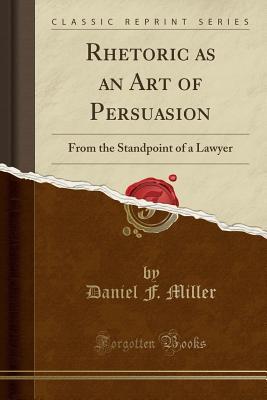
Rhetoric as an Art of Persuasion: From the Standpoint of a Lawyer (Classic Reprint)
The Art of Rhetoric: Ethos, Logos, and Pathos
The Art of Persuasion Hasn't Changed in 2,000 Years
Rhetoric - The Art Of Persuasion - Evidence, Expression, Appeal
Classical Rhetoric: The Three Means of Persuasion The Art of
Rhetoric: The Art of Persuasive Writing and Public Speaking
Rhetoric: The Art of Persuasion Van Norman Law Scottsdale
Rhetoric: The Art of Persuasion - New Acropolis Library
The origins – where is the connection between persuasion and
The Art of Persuasion Psychology Today
The Art of Persuasion - Shapiro Sher
Rhetoric, power and persuasion in Julius Caesar - The British
The Art of Persuasion Hasn’t Changed in 2,000 Years
The Art Of Persuasion - Free Online Courses By Alison©
How to seduce your audience: Rhetoric in marketing and the art of
Rhetoric: The Art of Persuasion in the Ancient and Modern Worlds
“Rhetoric is the art of finding the available means of persuasion in a
The Art of Persuasion: - Shapiro Sher
Chapter 5 - Rhetoric, the Art of Persuasion Flashcards Quizlet
The Art of Rhetoric: Ten Principles of Persuasive Speech - YouTube
Rhetoric - The Art Of Persuasion - Expression, Evidence
Rhetoric – Aristotle on the Art of Persuasion and Why it
Aristotle • The Art Of Rhetoric • Book I
The Art of Persuasion Aristotle's Rhetoric for Everybody - Sandala
History of Rhetoric, Volume I: The Art of Persuasion in Greece on
The Art of Persuasion: On Gilberto Perez's “The Eloquent Screen: A
Visual rhetoric: the art of persuasion through images – THE ART
Rhetoric: The Art of Persuasion Unit Rhetoric, Teaching high
Advertising - Marketing Smarts: Rhetoric and the Art of Persuasion
Persuasion: The Art of Selling Mastering Management
The 3 Methods of Persuasion Rhetoric - Aristotle — Freedom in
2.4: The Art of Rhetoric - Humanities LibreTexts
Rhetoric the Art of Persuasion - Student Homeworks
The Art of Rhetoric - Wendelberger
Defending science: How the art of rhetoric can help
The Art of Persuasion - Free Online Courses By Alison©
The Art of Persuasion Aristotle's Rhetoric for Everybody (The
Grade 11 The Art of Persuasion and the Craft of Argument - CT.gov
Rhetoric: The Art of Persuasion by Adina Arvatu and Andrew Aberdein
Aristotle's Rhetoric: The Philosophy of Persuasion Classical
The Art of Persuasion Financial Times
The Art of Persuasion - American Bar Association
The Art of Persuasion in Greece (A History of Rhetoric, Vol. 1
Open-Handed Communication: The Rhetoric of Christian Persuasion
The Art of Rhetoric: Persuasive Techniques in Advertising Vol
The art of Rhetoric download free [PDF and Ebook] by Aristotle
Rhetoric: the Art of Persuasion - 1094 Words Bartleby
The Art of Rhetoric Quotes by Aristotle - Goodreads
Classical Rhetoric 101: The Five Canons of Rhetoric
The art of persuasion 1: Rhetoric - Business Book Ghostwriter
The Art of Rhetoric by Aristotle - Goodreads
Adaptive Rhetoric: Evolution, Culture, and the Art of Persuasion
New Testament Rhetoric: An Introductory Guide to the Art of
Rhetorical Leadership is the Art of Persuasion
The Internet Classics Archive Rhetoric by Aristotle
Rhetoric: The Art of Persuasion Unit by Open Classroom TpT
Rhetoric: The Art of Persuasion: Aberdein, Andrew, Arvatu
The art of persuasion aristotle's rhetoric for everybody (the zaytuna curriculum series) published by sandala available at mecca books with free shipping.
May's speech could not persuade the unpersuadable the prime minister deployed clever rhetorical tricks but her appeal to mps was doomed.
Today we’ll cover the three means of persuasion as set forth by aristotle in the art of rhetoric. According to aristotle, a speaker or writer has three ways to persuade his audience: of the modes of persuasion furnished by the spoken word there are three kinds.
This course revives the study of the ancient art of persuasion (or rhetoric) for the of rhetorical style to an analysis of famous examples of persuasive discourse.
Rhetoric, according to aristotle, is the art of seeing the available means of persuasion. Aristotle focused on oration, though, and he described three types of persuasive speech. Forensic, or judicial, rhetoric establishes facts and judgments about the past, similar to detectives at a crime scene.
The art of rhetoric the young shakespeare’s study of rhetoric would have been accompanied by latin lessons, another central element of 16th-century schooling. He would have become acquainted with many classical writers and historical figures, including the roman writer cicero – a distinguished orator and politician who features in julius.
Let rhetoric be [defined as] an ability, in each [particular] case, to see the available means of persuasion. This is the function of no other art; for each of the others.
Jan 17, 2017 according to aristotle, there are three persuasive appeals: ethos, logos and pathos.
He describes it, not as an art form, but as “a type of flattery”, within his dialogue gorgias.
Conveying a convincing message can benefit your personal, public, and professional lives. This course is an introduction to the theory and practice of rhetoric, the art of persuasive writing and speech. In it, you will learn to construct and defend compelling arguments, a crucial skill in many settings.
Learn vocabulary, terms, and more with flashcards, games, and other study tools.
The art of rhetoric:* how to use aristotle's three main rhetorical styles rhetoric (n) - the art of speaking or writing effectively. (webster's definition) according to aristotle, rhetoric is: the ability, in each particular case, to see the available means of persuasion. He described three main forms of rhetoric: ethos, logos, and pathos.
Oct 18, 2019 what is rhetoric? the classical art of persuasion; pathos: the appeal to emotion; kairos: the right moment in time; telos: knowing your purpose.
The art of rhetoric is a study of argumentative persuasion using two modes- example or enthymeme to promote truth and justice. Divided in three parts it is taking a look into into the speaker, emotions, the *logos* and style of the speech.
It is a form of discourse that appeals to people’s emotions and logic in order to motivate or inform. The word “rhetoric” comes from the greek “rhetorikos,” meaning “oratory.
Aristotle defined it as “ the faculty of observing, in any given case, the available means of persuasion�”.
Aristotle defines rhetoric simply as the faculty of observing in any given case the available means of persuasion.
Rhetoric is, therefore, the science of the laws of effective discourse” (880). “rhetoric may be defined as the art of efficient communication by language. It is the art to the principles of which, consciously or unconsciously a good writer or speaker must conform.
Provide your students with a more complete understanding of rhetorical analysis with a variety of concept.
Correspondingly, one type of persuasion produces belief without knowledge ( false thus, socrates says, rhetoric is not an art, but the occupation of a shrewd.
Deliberative rhetoric (from the greek—rhetor: orator, tekhne: art), also known as legislative rhetoric or deliberative discourse, is speech or writing that attempts to persuade an audience to take—or not take—some action. According to aristotle, the deliberative is one of the three.
Rhetoric is the faculty of discovering in any particular case all of the available means of persuasion. The classical greek philosopher aristotle is known as the ‘father of rhetoric’. He developed a theory of persuasion in the 4 th century bce that’s still every bit as applicable today.
The argumentative modes of persuasion are the essence of the art of rhetoric: appeals to the emotions warp the judgement.
Student homeworks is a freelance writing company that is dedicated on academic writing. We help students to complete assignments including term papers, essays, book reviews, critical essays, comparison essays, research proposals, final papers, thesis and dissertations.
So the purpose in any rhetorical situation is this: to persuade an audience to make the best decision possible, which is why rhetoric is an art of practical reason,.
Nov 22, 2015 the greek philosopher aristotle defined rhetoric as three different appeals: ethos – appeal to ethics, image, or credibility; logos – appeal to logic.
However, the historic meaning of rhetoric is the art of persuasion. Using this broad definition of rhetoric, christian witness is inherently rhetorical, since the gospel (as guinness rightly emphasises) advances through persuasion and not coercion.
The trivium is concerned with communication; grammar, logic, and rhetoric. The quadrivium is an advanced study of number, geometry, music, and cosmology. Persuasion (excluding brute force) operates through a combination of three foundational pillars which the greeks called ethos, logos, and pathos.
Rhetoric – the skilful use of language in order to move or persuade – was big business in elizabethan england judging by the amount of books published on the subject.
Today we’re kicking off a five-part segment on the five canons of rhetoric. As you remember from our brief introduction to classical rhetoric, the five canons of rhetoric constitute a system and guide on crafting powerful speeches and writing.
Because the western world has offered the most systematic historical, methodological, and theoretical approach to rhetoric, this entry will.
Farrell: rhetoric is an acquired competency, a manner of thinking that invents possibilities for persuasion, conviction, action, and judgments.
May 28, 2020 ways we can enhance our persuasion skills in trial and appellate courts by using principles of classical rhetoric.
Rhetoric: the art of persuasion since the development of the human language, many philosophers throughout history have given their own interpretation of rhetoric. The term rhetoric is used to describe the effectiveness of language and how incorporating certain aspects into writing and speech can lead to improved clarity and persuasion.
According to aristotle, rhetoric is: the ability, in each particular case, to see the available means of persuasion.
Rhetoric is the art of ruling the minds of men, or so plato believed. His prize student, aristotle, took a laxer view defining rhetoric as the act of discovering possible means of persuasion.
Aristotle’srhetoric!foreverybody artsoflibertyproject scottf. Crider % ii% andwhymanisapoliticalanimalinagreatermeasurethanany beeoranygregariousanimal isclear.
May 2, 2002 the underlying theory of this means of persuasion is elaborated in a few plato argued in his gorgias that rhetoric cannot be an art (technê),.
Non-argumentative means of persuasion include making eyes, brushing hands, and putting a good meal onto the table. But much more common, especially in the public sphere, is the use of rhetoric,.
Rhetoric may be defined as the faculty of observing in any given case the available means of persuasion. Every other art can instruct or persuade about its own particular subject-matter; for instance, medicine about what is healthy and unhealthy, geometry about the properties of magnitudes, arithmetic.
“the liberal arts of language—grammar, logic, and rhetoric —remain fundamental to a liberal education.
This much-needed introduction to the ancient art of persuasion in the new testament doesn’t only explore the use of rhetorical tools and devices, it introduces everything ancient speakers and writers used to convince their audiences. New testament scholar ben witherington argues that rhetorical criticism is a more fruitful approach to the new testament epistles than literary and discourse.
In aristotle’s world, rhetoric was the art of discovering all available means of persuasion, and he heavily emphasized the logical aspect of this process. He considered rhetoric a counterpart of both logic and politics, and called it “the faculty of observing in any given case the available means of persuasion.
Logic is the art of thinking; grammar, the art of inventing symbols and combining them to express thought; and rhetoric, the art of communicating thought from one mind to another, the adaptation of language to circumstance. Another description is: logic is concerned with the thing as-it-is-known,.
Nov 30, 2011 marketing smarts: rhetoric and the art of persuasion logic—using the beliefs and expectations of your audience to your persuasive advantage,.
May 29, 2020 put 50 rhetorical scholars in a room together and you'll have 50 slightly (or radically) different interpretations about what constitutes rhetoric.
Rhetoric as an educational agenda or program that inculcates the art or skill of the rhetor.
Rhetoric is the art of persuasion, which along with grammar and logic is one of the three ancient arts of discourse.
Feb 3, 2016 this slim volume of rhetorical terms and techniques provides a highly readable and enjoyable romp through the art of persuasive language.
Visual persuasion with an overview of visuals and a visual argument assignment. Assessment options with a rhetorical analysis essay assignment, a persuasive essay assignment, a mini magazine/newspaper project and a 15 question multiple choice and short answer test.
Real and the apparent means of persuasion, just as it is the function of dialectic to discern the real and the apparent syllogism. What makes a man a ‘sophist’ is not his faculty, but his moral purpose. In rhetoric, however, the term ‘rhetorician’ may describe either the speaker’s knowledge of the art, or his moral purpose.
Persuasion isn't an art form in the same sense as painting or music, but rather involves the finely tuned creative skills—or art—of language and communication. However, persuasion does include some of the qualities of more traditional art forms.
The art of persuasion the faculty of observing, in any given case, the available means of persuasion and choosing the best among those definition of rhetoric broken down.
The study of rhetoric—the art of selecting the most effective means of persuasion—actually predates the classical age of greece and rome. The oldest known writing on the subject was composed in egypt at least 4,000 years ago by pharaoh huni, who instructed his son on effective speaking.
The art of persuasion because the western world has offered the most systematic historical, methodological, and theoretical approach to rhetoric, this entry will focus on the western concept of rhetoric, understood as the art of persuasion, essentially through speech.
Dec 21, 2010 in the art of rhetoric, aristotle states that appealing to reason means allowing “ the words of the speech itself” to do the persuading.
The book description for history of rhetoric is currently unavailable. History of rhetoric, volume i: the art of persuasion in greece.
What is rhetoric? in its simplest form, rhetoric is the art of persuasion. Through writing and speaking, we try to persuade and influence our readers, either directly or indirectly. We work to get them to change their minds, to do something, or to begin thinking in new ways.
3 evaluate a speaker's point of view, reasoning, and use of evidence and rhetoric, assessing the stance, premises, links among ideas, word.
Jul 15, 2019 more than 2,000 years ago aristotle outlined a formula on how to master the art of persuasion in his work rhetoric.
This course is an introduction to the theory and practice of rhetoric, the art of persuasive writing and speech. In it, you will learn to construct and defend compelling arguments, an essential skill in many settings.
Rhetoric as the art of persuasion has always played an important role within societies. It is the main tool in all kinds of debates and the key technique for persuading a large audience. It is used by politicians, members of the courts of justice, scientists, even actors in show business and leaders of commerce and industry.
Feb 1, 2021 rhetoric is considered the art of speaking or writing persuasively. Learn as we will explore the three major modes of persuasion: logos, pathos.
Post Your Comments: