Download The Holocaust, Religion, and the Politics of Collective Memory: Beyond Sociology - Ronald J. Berger | ePub
Related searches:
Programs on Ethics, Religion, and the Holocaust — United States
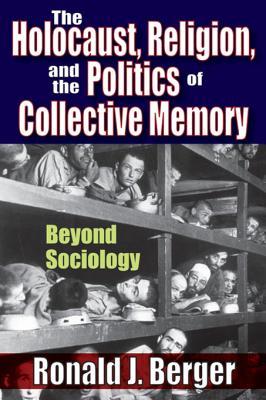
The Holocaust, Religion, and the Politics of Collective Memory: Beyond Sociology
Religion and the Uniqueness of the Holocaust SpringerLink
Faith, Ethics and the Holocaust - Oxford Academic Journals
Jewish Faith and the Holocaust Religious Studies Cambridge Core
Ethics, Religion, and the Holocaust — United States Holocaust
2021 Annual Seminar on Ethics, Religion, and the Holocaust
Jewish Faith and the Holocaust: A Fragment - Emil L
Jewish Faith and the Holocaust: A Fragment - Emil L. Fackenheim
The Faith and Doubt of Holocaust Survivors (Routledge Jewish
The Holocaust: Religious and Philosophical Responses - Carleton
Religions - Judaism: Children and the Holocaust - BBC
Resources on Ethics, Religion, and the Holocaust — United
The Catholic Church and the Holocaust Origins: Current
Religion, Theology and the Holocaust – Syracuse University Press
Religion and atrocity: the influence of religion on perpetrators
Jewish Religious Life and the Holocaust Experiencing
Religion And The Holocaust by Richard E. Smith (March 1997
Faith, ethics and the Holocaust: the Holocaust survivor's
Religion in camps and ghettos – The Holocaust Explained
The Impact of the Holocaust on Jewish People and other
Religion – The Holocaust Explained: Designed for schools
How the Holocaust Challenged Faith My Jewish Learning
Holocaust Survivors: The Search for Faith August 3, 2001 Religion
The Holocaust - Facts, Victims & Survivors - HISTORY
Jewish beliefs – The Holocaust Explained: Designed for schools
Two Important Lessons from the Holocaust The Jewish Press
The Failure of Christian Love in the Holocaust - Biola
De-Globalised Holocaust Memory and Cultural-Religious Diversity
The Christian Response to the Holocaust - SAGE Journals
An Introductory History of the Holocaust
Christian Persecution of Jews over the Centuries — United
Responsibility for the Holocaust - Wikipedia
History of the Holocaust: Holocaust & Religious Belief
Teaching about the Holocaust: A Religious Studies Perspective
Remembering the Holocaust - as a Christian The Woolf Institute
The Failure of Christian Love in the Holocaust - Biola University
Religion, Loyalty, and Belonging Facing History and Ourselves
The Holocaust as a Challenge to Jewish Thoughts - UTP Journals
Participants of the 2019 international religious freedom (irf) ministerial tour the permanent exhibit.
5 million children from across europe were murdered under the nazi regime.
The articles in this issue address teaching about the holocaust in the context of a religious studies curriculum.
The 2021 seminar on ethics, religion, and the holocaust will examine the holocaust and its historical, ethical, and theological relevance for christianity and its particular implications for theologians, clergy, and christian leaders today.
27 aug 2020 this guide is designed to be a starting point for research on topics related to the holocaust (1939-1945) as explored through religious themes,.
The nazis' antisemitic beliefs were filtered into all aspects of life in the third reich. This drawing was created by a young girl, gerda nabe, in one of her school.
The programs on ethics, religion, and the holocaust (perh) foster scholarship, teaching, and reflection on the profound ethical, theological, and historical questions raised by the holocaust. Located in the jack, joseph and morton mandel center for advanced holocaust studies, perh promotes and supports:.
These include voices from the holocaust period itself, from jewish and christian sermons, letters.
By showing what catholics could — and should — have done, the events leading up to stein’s death provide an opportunity to examine catholic complicity in the holocaust, rather than obscure it as critics have charged. In 1942, while stein was a refugee in holland, the nazis made an offer to the dutch catholic bishops.
Within the past two centuries, three events have shaken and are still shaking jewish religious existence—the emancipation and its after-effects, the nazi holocaust, and the rise of the first jewish state in two thousand years—and of these, two have occured in our own generation. From the point of view of jewish religious existence, as from so many other points of view, the holocaust is the most shattering.
Since 1945, the word has taken on a new and horrible meaning: the ideological and systematic state-sponsored persecution and mass murder of millions of european jews (as well as millions of others,.
Holocaust theology is a body of theological and philosophical debate concerning the role of god in the universe in light of the holocaust of the late 1930s and 1940s. Jews were killed in higher proportions than other groups; some scholars limit the definition of the holocaust to the jewish victims of the nazis as jews alone were targeted for the final solution. Others include the additional five million non-jewish victims, bringing the total to about 11 million.
The holocaust (also called ha-shoah in hebrew) refers to the period from january 30, 1933 - when adolf hitler became chancellor of germany - to may 8, 1945, when the war in europe officially ended.
Helps explain the underlying am- bivalence of the christian community toward the jewish community in the past.
The ancient problem of theodicy was one of the first philosophical problems, related to the holocaust, which jewish religious thinkers felt obliged to confront.
While it may well account for the dutiful destructiveness of the dispassionate bureaucrat who may have shipped jews to auschwitz with the same degree of routinization as potatoes to bremerhaven, it falls short when one tries to apply it to the more zealous, inventive, and hate-driven atrocities that also characterized the holocaust.
Holocaust victims were people targeted by the government of nazi germany based on their ethnicity, religion, political beliefs, or sexual orientation. The institutionalized practice by the nazis of singling out and persecuting people resulted in the holocaust, which began with legalized social discrimination against specific groups, involuntary hospitalization, euthanasia, and forced.
Religion attempts to make sense out of the world around us, finding order and meaning in what often seems chaotic and meaningless. Nothing has shaken the foundation of our religion like the chaotic and senseless shoah.
Religion was a huge part of people’s everyday life and culture. As with trade unions and other group organisation’s, the nazis saw religion as a threat to their total power. Jews and jehovah’s witnesses were the major religious minorities in germany in the 1930s.
Like the jews, the roma (gypsies) were chosen for total annihilation solely because of nothing other than their race. Even though jews are defined by religion, hitler saw the jewish people as a race that he believed needed to be completely annihilated. Likewise, the roma gypsies were migrant people that were persecuted throughout history.
Grades: 6-adult history of the holocaust covers a series of historical events, individual biographies, and concepts that together provide for an overall.
Gcrr is hosting the 2020 international econference on religion and the holocaust. The purpose of this 3-day virtual conference is for academics, researchers,.
The third reich's system of murder squads, concentration camps and killing centres eliminated nearly 6 million jews; though jewish communities had previously.
9 jan 2017 andy tix uses this international holocaust remembrance day to reflect on his christian faith in light of the difficult history of christian involvement.
These us holocaust memorial museum resources highlight aspects of holocaust history as it relates to the choices and actions of religious communities. They may be of particular interest to university and seminary faculty, as well as community and religious groups.
It is crucial to remember that the holocaust sprang from a predominantly christian part of the world. In fact, holocaust historian doris bergen notes that approximately 95 percent of germans at that time were baptized into the christian faith. Many who declared jesus as “lord and savior” were personally involved in the atrocities.
What roles did religion play in the lives of jews during the holocaust? less than half of european jewry actively practiced judaism at the outbreak of world war ii, and religious jews expressed piety and faith in a variety of ways. This collection of primary sources approaches religious life as a range of responses—communal, personal, and spiritual—to escalating persecution under nazi rule.
3 aug 2001 one of the consequences of the holocaust was its effect on the faith of observant jews.
The faith and doubt of holocaust survivors (routledge jewish studies series) [ brenner, reeve robert] on amazon.
The program of extermination nazis called the final solution took the lives of approximately six million jews, amounting to roughly 60 percent of european.
The survivor's religious experiences, both during and after the holocaust have been underexplored in the psychological literature. This essay concerns itself with the survivor's religious realm as it affects the psychotherapeutic process. It also provides a conceptual framework for helping the therapist understand the significance of religion in the survivor's life.
24 oct 2018 a survivor of nazi germany's persecution of jews recounts her experience and explains the importance of religious freedom in today's world.
Post Your Comments: