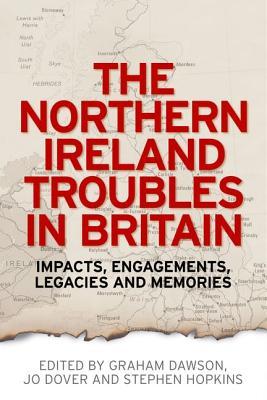
Full Download The Northern Ireland Troubles in Britain: Impacts, Engagements, Legacies and Memories - Graham Dawson file in ePub
Related searches:
The troubles, also called northern ireland conflict, violent sectarian conflict from about 1968 to 1998 in northern ireland between the overwhelmingly protestant unionists (loyalists), who desired the province to remain part of the united kingdom, and the overwhelmingly roman catholic nationalists (republicans), who wanted northern ireland to become part of the republic of ireland.
The conflict in northern ireland known as the troubles lasted almost 30 years and cost the lives of more than 3,500 people.
The troubles were a period of conflict in northern ireland involving republican and loyalist paramilitaries, the british security forces, and civil rights groups. They are usually dated from the late 1960s through the good friday agreement of 1998.
The troubles in northern ireland the troubles in northern ireland – a brief overview the troubles is the term given to the conflict between nationalists and loyalists in northern ireland from the 1960s onwards until 1998.
The troubles, also known as the northern ireland conflict, was a political and nationalistic movement fueled by the constitutional status of northern ireland. Protestant unionists/loyalists wanted northern ireland to remain a part of the united kingdom.
The beginning of the troubles in northern ireland itself began in the late 1960s, when a handful of catholics decided to demonstrate against the anti-catholic discrimination then in force in northern ireland. They opted for the pacifist route, holding marches and sit-ins in protest.
The conflict in northern ireland is complicated and not easy to explain. In 1169, the catholic king henry ii of england invaded ireland, and all of ireland became.
However, in the 1990s loyalist paramilitary groups too began to develop their own political wings - the progressive unionist party (pup) and the ulster democratic.
To outsiders, the troubles in northern ireland appeared a sectarian quagmire, a horrific media parade of bombings, civilian.
In 1968, the northern ireland parliament had been dominated by unionists for over fifty years. Its attempts to solve social and political ills, such as institutional.
The troubles in derry the city of derry, northern ireland, was severely affected by the troubles. The conflict is widely considered to have begun in the city, with.
The troubles in britain and europe the troubles were a period of conflict in northern ireland involving republican and loyalist paramilitaries, the british security forces, and civil rights groups. They are usually dated from the late 1960s through the good friday agreement of 1998.
15, 1998: an ira splinter group called real ira, carries out the deadliest paramilitary attack in northern ireland during a car bombing in omagh in northern ireland, leaving 29 dead and more.
The troubles (irish: na trioblóidí) was an ethno-nationalist period of conflict in northern ireland that.
A dark period of 30 years is called “troubles“, a dark period which marked northern ireland for the rest of its history. It began in 1969 and ended in 1998, and was a time of great tension between the north irish and the english, who were constantly clashing through terrible attacks and other acts of violence that caused the deaths of more than 3 480 people.
14 august 1969: british army first deployed onto streets of northern ireland 9 august 1971: internment introduced and violent protests begin 1972: bloodiest year.
Frank brennan talks about members of the irish republican army killed during northern ireland's troubles. He stands by a memorial for them in short strand, east belfast, northern ireland.
In reality the troubles started back with the plantation of ulster in 1609 and, to this day, the quarrel remains about which flag flies over the now six counties of northern ireland.
Since i should not assume that everyone here is informed about the nature of the conflict in northern ireland, i will give you a quick history lesson.
The troubles, violent conflict from about 1968 to 1998 in northern ireland between the overwhelmingly protestant unionists (loyalists), who desired the province.
Dec 28, 2020 though the northern ireland of today is a vastly different place than it was when the troubles began in 1968, it would be a mistake to assume.
This thesis examines the history of the conflict involving ireland, northern ireland, great britain, and the united kingdom that eventually led to the period of time.
Troubles (1968-1998) within this span of time, a war was fought in northern ireland between the republicans and the unionists / loyalists. The republicans had a strong sense of irish national identity. They believed and still believe that northern ireland should be united with ireland.
Narratives in northern ireland are all about who is telling the story and what historical precedents they can muster in its defence: the irish are born myth-makers.
Northern ireland is a place of natural beauty, mystery and celtic charm. In recent times, however, the history of northern ireland has been marred by political tension, sectarian feuding and paramilitary killing. From the late 1960s, the world watched in despair as northern ireland unravelled into unrest and violence.
Post Your Comments: